Session: MP04: Kidney Cancer: Basic Research & Pathophysiology I
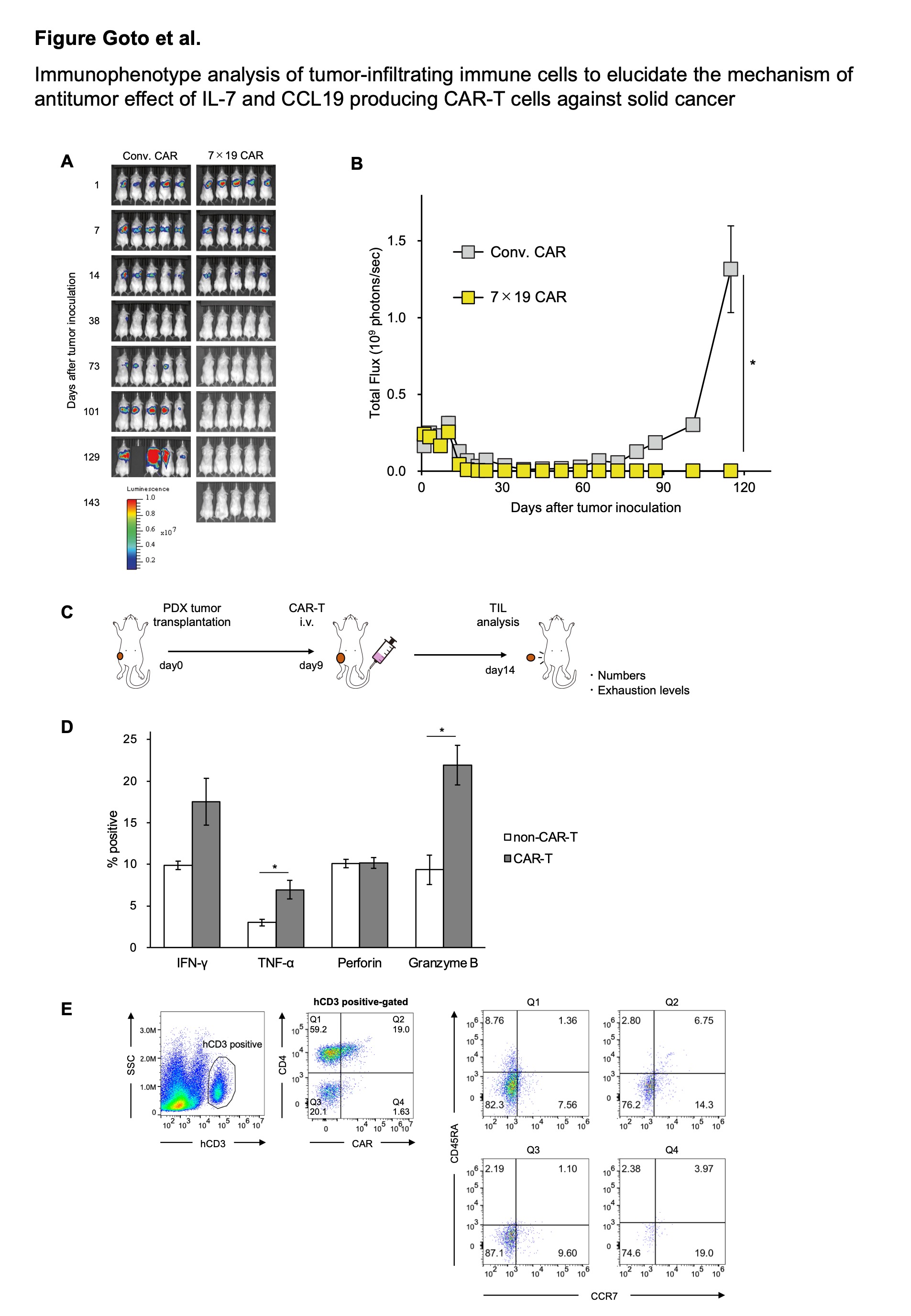
MP04-13: Immunophenotype Analysis of Tumor-infiltrating Immune Cells to Elucidate the Mechanism of Antitumor Effect of IL-7 and CCL19 Producing CAR-T Cells against Solid Cancer
Introduction: Chimeric antigen receptor (CAR)-T cell therapy against solid cancer is challenging. We reported that mouse CAR-T cells modified to produce interleukin- (IL)-7 and CCL19 (7×19 CAR-T) enhance the therapeutic efficacy against solid tumors by recruiting not only administered CAR-T cells but also endogenous T cells and DCs into tumors and inducing long-term antitumor memory responses. Furthermore, we reported that human 7×19 CAR-T cells show enhanced antitumor efficacy against patient-derived xenograft (PDX) tumor expressing mesothelin, for which 10% of renal cell carcinoma are positive. In this research, we explore the mechanism of antitumor activity of 7×19 CAR-T cells and object to prevail the difference between conventional CAR-T cells (Conv.) and 7×19, especially focusing on the immunophenotype of tumor-infiltrating lymphocytes (TILs). Methods: We produced a novel anti-human mesothelin 7×19 CAR-T cells, then assessed the antitumor activity against solid tumor in vivo using a malignant mesothelioma orthotopic tumor and a pancreatic cancer PDX models. Tumor was resected after the administration of Conv. or 7×19 CAR-T cells and analyzed TILs by flowcytometry focusing on the number, exhaustion marker, phenotype and cytokine producing ability. Results: 7×19 CAR-T cells showed superior antitumor efficacy compared to Conv. CAR-T cells in the orthotopic and PDX tumor models. In the PDX treatment model, TIL analysis revealed that not only CAR-T cells but also non-CAR-T cells were infiltrated effectively into tumors by 7×19 treatment compared to Conv. Exhaustion marker expressions such as PD-1 and TIGIT were significantly downregulated in 7×19 than Conv. The examination of the ability of TILs to express cytokines and effector molecules showed that significant increases of TNF-a and Granzyme B, as well as a trend of increased IFN-? in 7×19 CAR-T cells. The analysis of splenocyte after the treatment revealed that 7×19 CAR-T cells maintained their effector memory phenotype. Conclusions: It was found that 7×19 CAR-T cells showed enhanced antitumor potential by the maintenance of their effector functions. These data support the foresight of this therapy as a treatment option for patients with mesothelin-positive renal cell carcinoma. SOURCE OF Funding: Practical Research for Innovative Cancer Control, and Project for Cancer Research and Therapeutic Evolution (P-CREATE) 16770206 by Japan Agency for Medical Research and Development (AMED)