Resident Rutgers Robert Wood Johnson Medical School
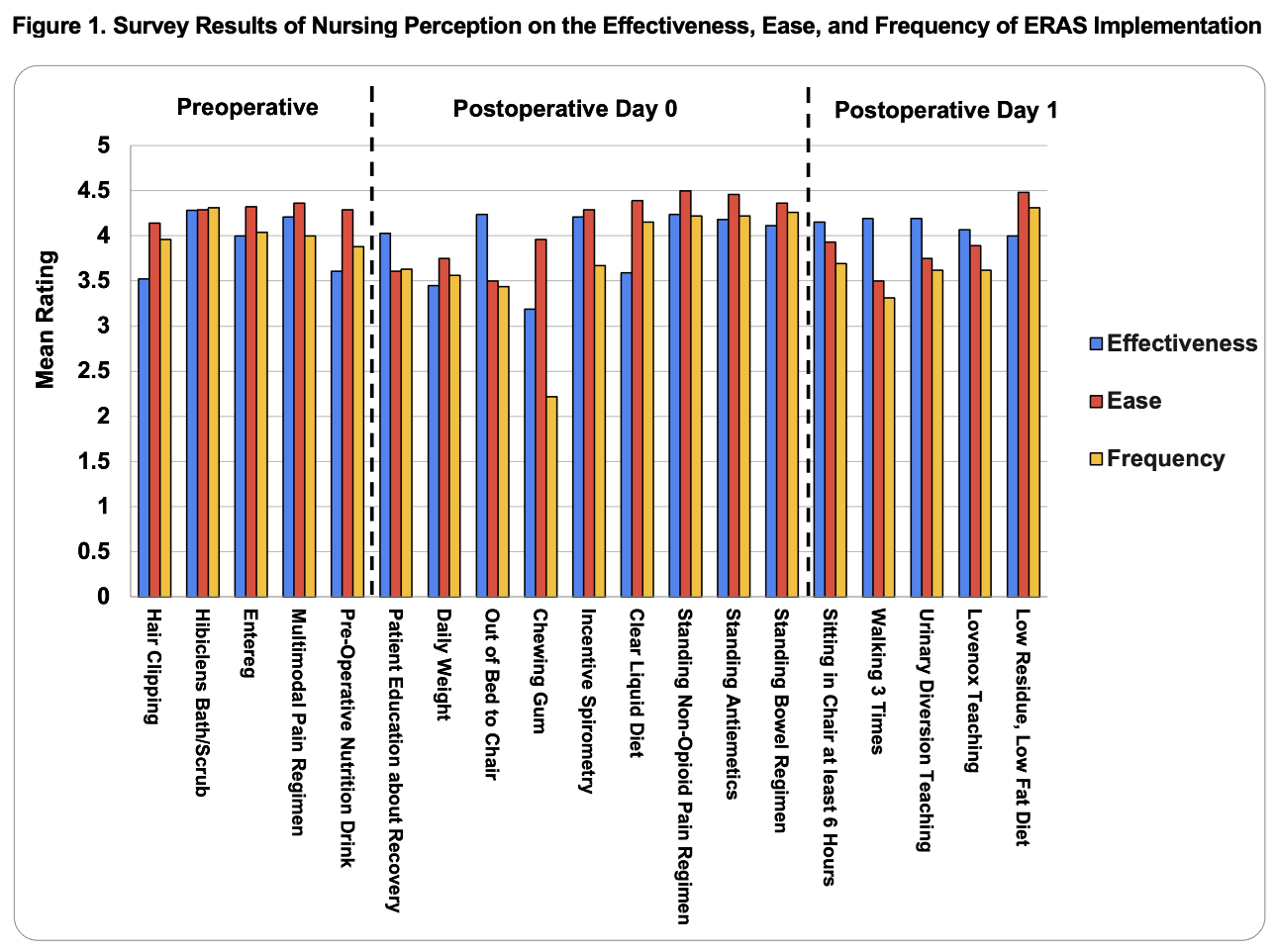
Introduction: Enhanced recovery after surgery (ERAS) protocols are evidence-based multimodal perioperative care pathways that have shortened hospital stays, optimized pain control, led to earlier mobility and recovery, and reduced rates of postoperative complications across several surgical specialties. However, adherence to and implementation of ERAS protocols is not universal. Our study aimed to identify barriers nursing staff face in implementing ERAS protocols in patients undergoing radical cystectomy. Methods: A survey was sent to preoperative, post-anesthesia care unit (PACU), and surgical oncology med/surg nurses about the effectiveness, ease, and frequency of ERAS implementation in the preoperative and early postoperative phase of care. Respondents rated each statement on a 5-point Likert scale and were able to provide narrative responses. Results: The survey was completed by 31 nurses (8 preoperative, 10 PACU and 13 surgical oncology nurses). The majority (80%) of surgical oncology nurses had prior ERAS training and 100% knew where to find additional resources about ERAS. Only 50% of PACU nurses and 33% of preoperative nurses reported they had received ERAS training. Approximately half of nurses surveyed agreed that ERAS improves workflow by standardizing care and setting clear expectations for staff. On POD 0, 21% of nurses reported chewing gum as slightly effective or not effective at all, with 36% never implementing it. Daily weight was seen as slightly effective or not effective at all by 17% of nurses. For at least 85% of nurses, it was somewhat or extremely easy to administer a standing pain regimen, bowel regimen, and antiemetics on POD 0. 75% of nurses believed ERAS improves patient experience, citing faster recovery time and better pain control. Lack of personnel (79%), time (68%), and resources (68%) were commonly identified by nurses as barriers to implementing ERAS (Figure 1). Conclusions: Consensus on the effectiveness and ease of implementation of ERAS protocols remains varied. Equipping nursing staff with sufficient resources, education and training is necessary for widespread successful implementation of ERAS. SOURCE OF Funding: Grant from the National Cancer Institute (P30CA072720)