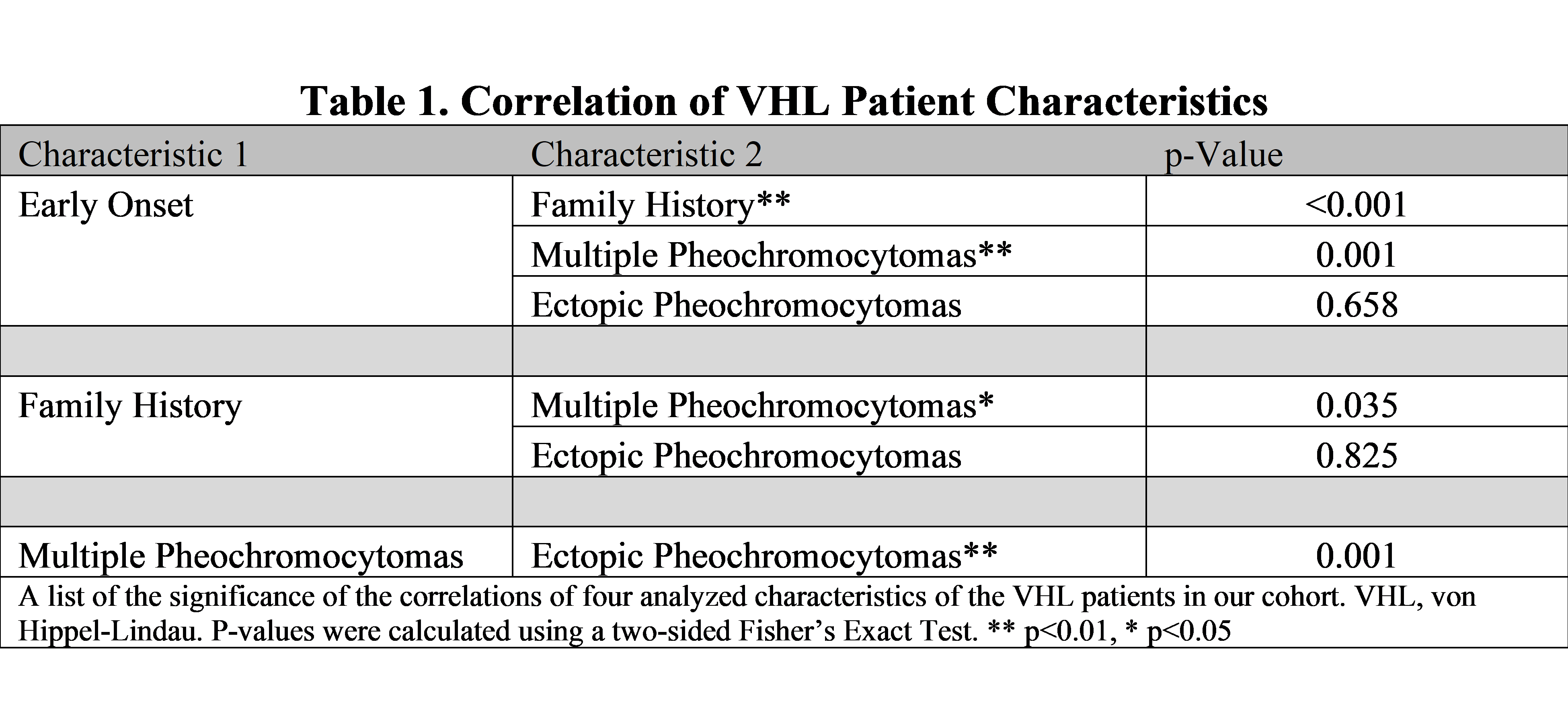
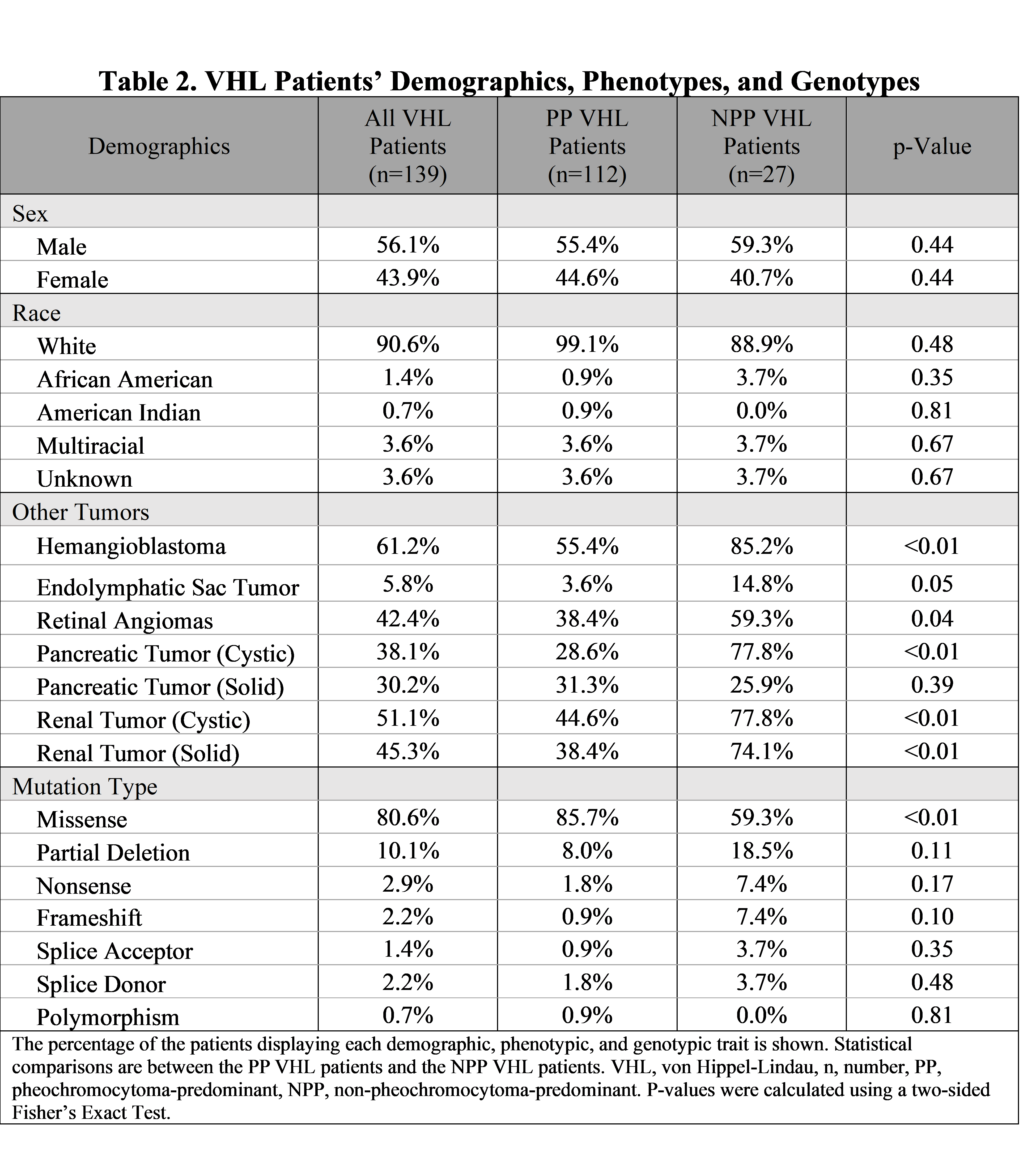
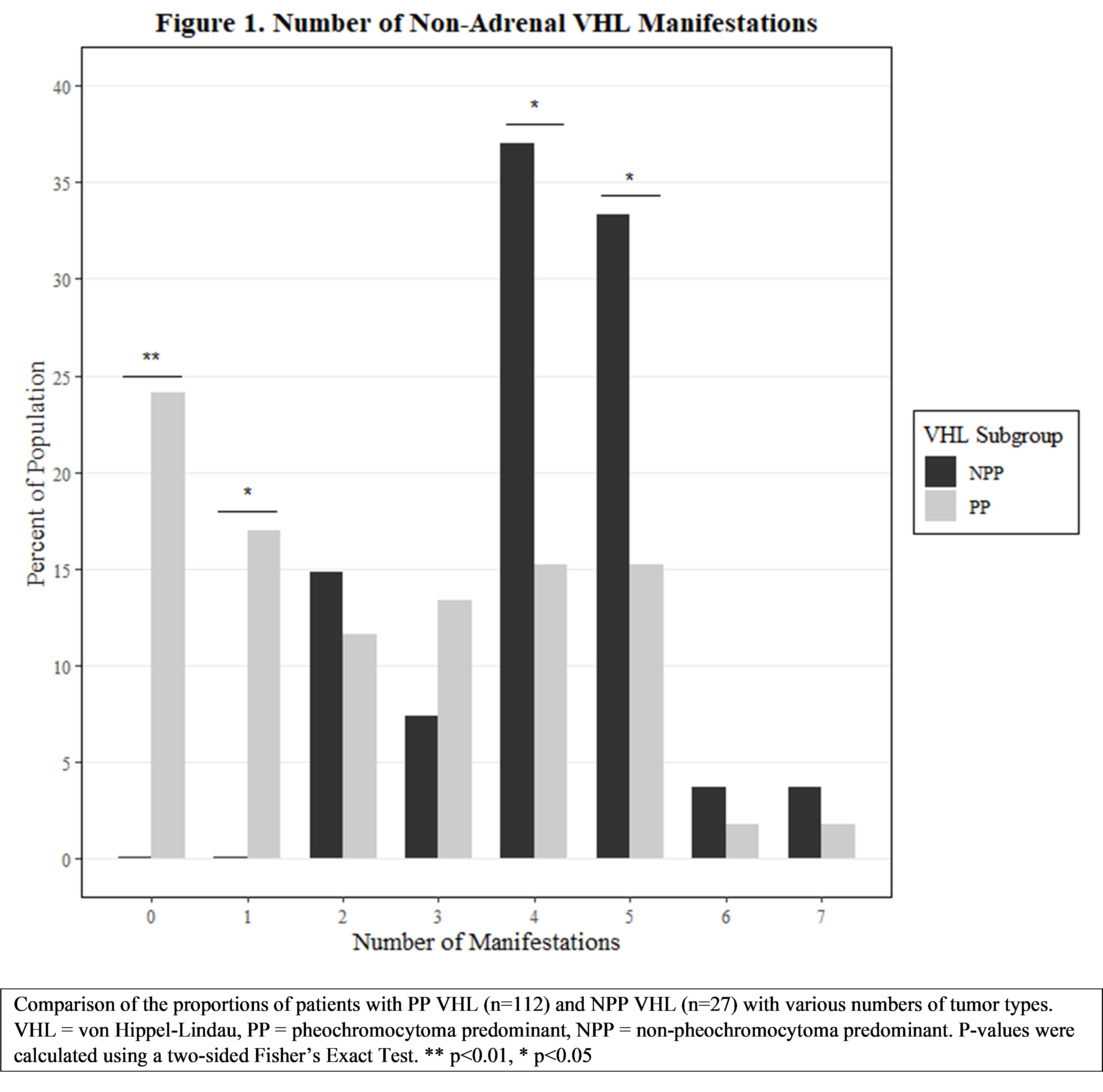
Introduction: Von Hippel-Lindau (VHL) disease is a heterogenous hereditary tumor syndrome affecting multiple organs. A subset of VHL patients present predominantly with pheochromocytomas. We developed a novel classification system to define pheochromocytoma-predominant (PP) VHL disease. Methods: VHL patients who underwent adrenalectomy with pathology-proven pheochromocytoma at our institution were included. We defined PP VHL a priori as patients with one or more of the following traits: early onset [age at first pheochromocytoma below the cohort’s median age (28.2 years)], family history of pheochromocytomas, multiple pheochromocytomas, and ectopic pheochromocytoma(s). PP VHL was compared to non-PP (NPP) VHL for differences in genotype and phenotype. Results: One-hundred thirty-nine VHL patients (56.1% male, 90.6% white) were examined. Preliminary analysis showed that three characteristics (early onset, family history, and multiple pheochromocytomas) correlated with each other (Table 1). Ectopic pheochromocytoma(s) did not correlate with two factors, so it was excluded from the definition of PP VHL. One-hundred twelve (80.6%) of our patients met the final definition. Further analysis demonstrated that PP VHL patients had significantly different phenotypes and genotypes than NPP VHL patients (Table 2). PP VHL patients were less likely to have most additional tumor types, including renal cell carcinoma (RCC) (p < 0.01) and more likely to have missense mutations (p < 0.01). Furthermore, PP VHL patients were most likely to have 0 or 1 extra-adrenal tumors while NPP VHL patients were most likely to have 4 or 5 (Figure 1). Conclusions: PP VHL patients are phenotypically distinct from their NPP counterparts and are significantly less likely to have more than one other VHL manifestation, including RCC. SOURCE OF Funding: Supported by the National Institutes of Health (NIH) Intramural Research Program, and the NIH Medical Research Scholars Program, a public–private partnership supported jointly by the NIH and contributions to the Foundation for the NIH from the Doris Duke Charitable Foundation, The American Association for Dental Research, the Colgate-Palmolive Company, and other private donors.