Introduction: Approximately one quarter of all bladder-cancer patients are females, and studies indicate that female patients may have an inferior oncological outcome. Radical cystectomy is the gold standard treatment for aggressive bladder cancer. However, the long-term outcome for females after robot-assisted radical cystectomy (RARC) is not well described in the scientific literature.
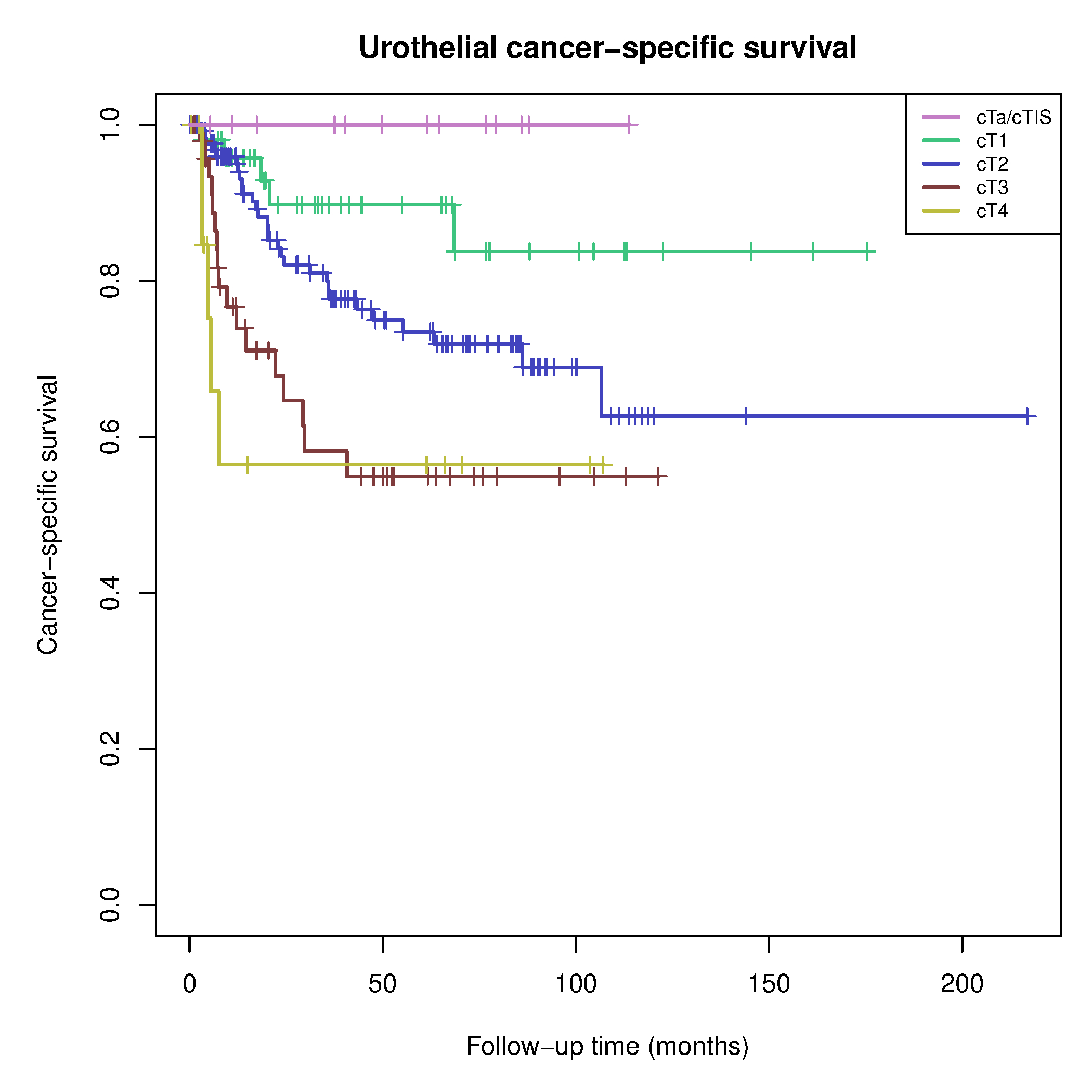
Objectives: To describe the long-term oncological outcomes and complications after RARC in female patients. Methods: In total, 270 females undergoing RARC due to urothelial cancer at 3 high-volume centers (Karolinska University Hospital, The Mount Sinai Hospital and USC) during 2004 to 2020 were followed. Data include age, cT-, pT-, N-, and M-stage, smoking, urinary diversion, and surgical strategy for pelvic organ preservation (POP). Outcome data for early and late complications according to Clavien-Dindo, readmission, re-operation, and cause of death were obtained. Median follow-up time was 952 days (inter-quartile range, 279 - 2089 days). Results: Muscle invasive bladder cancer (MIBC; 71.5%) was more prevalent than non-muscle invasive bladder cancer (NMIBC; 24.9%). Fifteen percent received a neobladder and 17.7% underwent POP. Cancer-specific death (CSD) was 20.7% during the follow-up period (Fig 1). No patients with TIS grade cancer died from cancer during follow-up, while higher cT-stage was associated with earlier CSD. For cT-stages 1-4, CSD ceases over time. Complication-free surgery was reported for 52.6% (early) and 82.2% (late) of patients. The incidence of early complications by Clavien-Dindo were 35.1% for I-II and 12.3% for III or higher, respectively. Readmission within 30 days was 22.2% and re-operation within 30 days was 1.5%. Conclusions: The oncological outcome in our data appear to have no clear differences with published male cystectomy series. Also, the complication rates among women undergoing robot-assisted radical cystectomy seems comparable to other published series. SOURCE OF Funding: None.