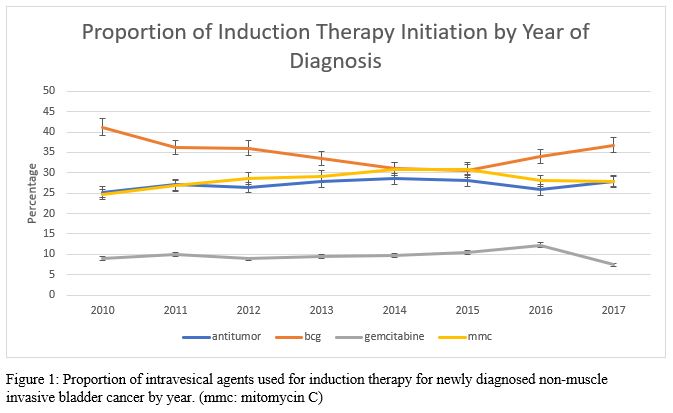
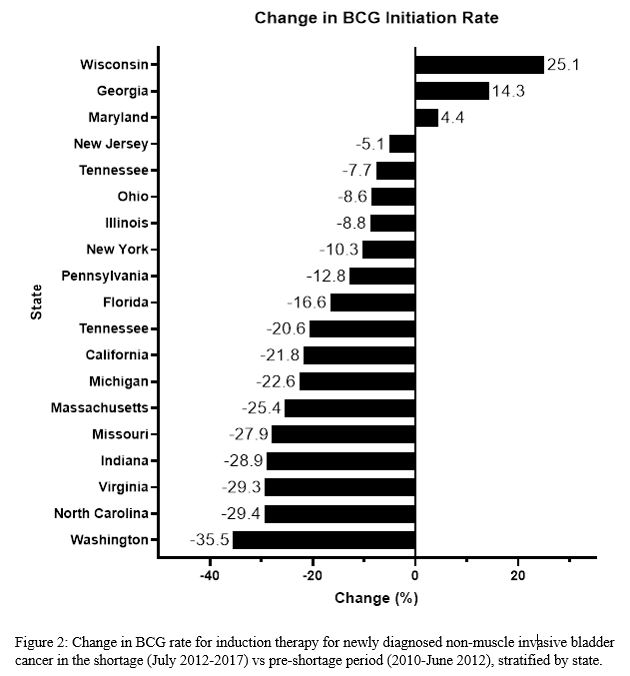
Introduction: Bacillus Calmette-Guerin (BCG) is the gold standard for treatment of non-muscle invasive bladder cancer. In the last two decades, the two major manufacturers of BCG have suffered production failures or have left the market due to economic infeasibility. This has resulted in a worldwide shortage of this important biologic drug. We used a national representative dataset to describe the effect of this shortage on intravesical treatment patterns for non-muscle invasive bladder cancer. Methods: Using claims data from a 5% random sample of Medicare beneficiaries, we identified patients =66 years of age who received intravesical therapy within 1 year of bladder cancer diagnosis from 2010-2017. The BCG shortage period was defined from July 2012, when the FDA ordered Sanofi to immediately cease drug production due to a facility contamination. We estimated changes in the proportion of patients treated with BCG, mitomycin C, gemcitabine, or other intravesical agents before and during the shortage. We evaluated state-level changes in BCG induction rates before and during the shortage period. Results: 7971 patients were included in our study. The proportion of eligible patients receiving BCG induction therapy decreased 5.9%, from 38.9% (1030 of 2648 patients) in the pre-shortage period, to 33.0% (1756 of 5323 patients) in the shortage period (p < 0.001). Mitomycin C use increased from 24.6% in 2010 to a peak in 30.9% in 2014 and 2015 (p=0.001). The use of gemcitabine remained stable (p=0.55). Among 19 states reporting data on =50 patients, 16 (84%) had a decrease in BCG initiation rate during the shortage period, ranging from 5.1% (New Jersey) to 35.5% (Washington). Conclusions: During the BCG drug shortage, BCG use for non-muscle invasive bladder cancer decreased with a compensatory rise in mitomycin C. A large variation in state-level BCG utilization may reflect differences in regional practice patterns or BCG availability. SOURCE OF Funding: None.