Faculdade de Medicina da Universidade de São Paulo
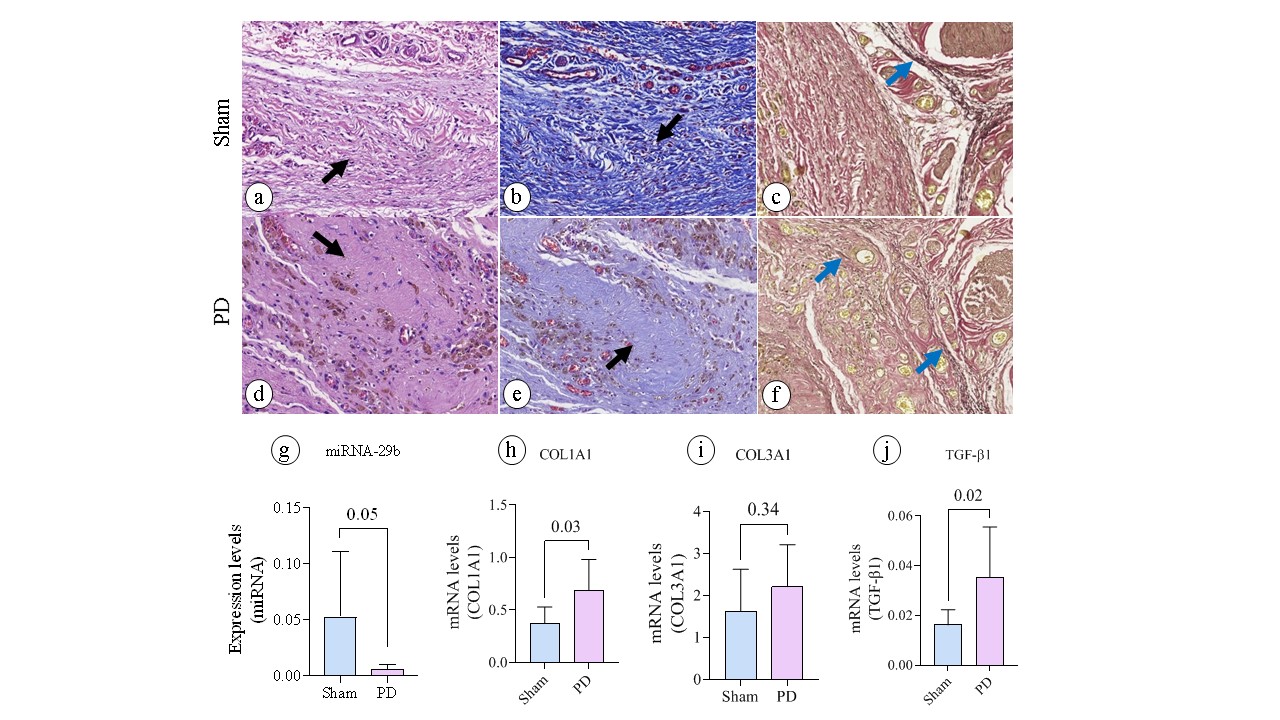
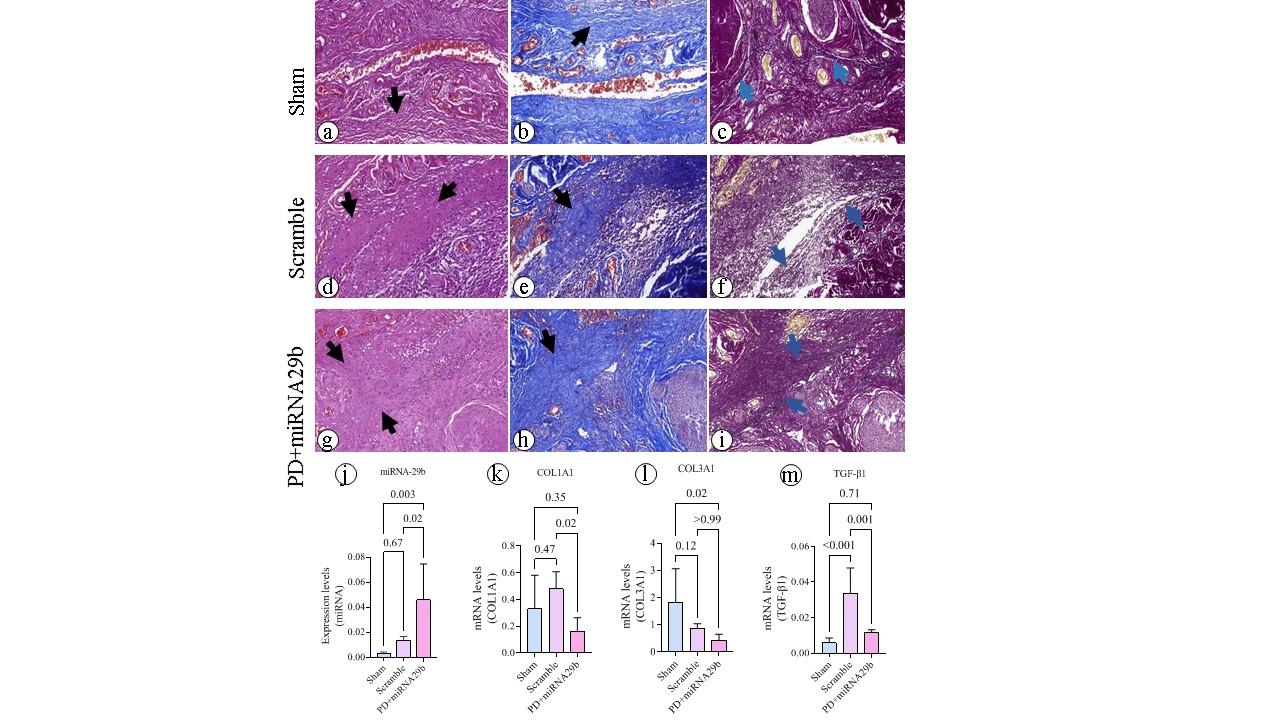
Introduction: Peyronie's disease (PD) is characterized by the formation of fibrotic plaques on the tunica albuginea (TA) of the penis. Effective treatments are limited, and surgery remains the best option, although it does not regress the disease. The therapy with microRNAs (miRNAs) is an attractive alternative for several pathologies because they act in the regulation of gene expression. The miRNA-29b regulates extracellular matrix genes, such as collagen, and its decreased expression can be found in fibrotic diseases. We aimed to investigate the therapeutic potential of miRNA-29b in a fibrin-induced rat model of PD. Methods: To generate PD-like plaques, rats received injections into the TA at 100 µL of each of the human fibrin and thrombin solutions on days 0 and 5. After fibrin injections, 18 rats were randomly divided into three groups (n = 6/group): PD+miRNA29b group, PD+miRNA negative group (Scramble), and sham group. Treatment with mimic miRNA-29b or its negative control was performed on days 14, 21, and 28. The mid-penile shaft was removed on day 30 for histologic examination by Hematoxylin and eosin (H&E), Masson trichrome, and Verhoeff staining and qPCR. Results: The establishment of the animal model was confirmed by the histopathological analyses with the identification of fibrosis (Figure 1a-f), underexpression of miRNA-29b (Figure 1g) and overexpression of COL1A1 and TGF-ß1 (Figure 1h-j). After treatment, the Fibrosis+miRNA-29b group showed a decreased fibrotic process in the TA (Figure 2a-i) and observed overexpression of miRNA-29b (Figure 2j) and underexpression of genes COL1A1, COL3A1, and TGF-ß1 in the PD+miRNA29b group (Figure 2k-m). Conclusions: Here, we demonstrated for the first time that overexpression of miRNA-29b attenuated fibrosis in the rat model of PD. The results of this study suggest that treatment with miRNA-29b may represent a new effective tool for PD. SOURCE OF Funding: Not applicable.