The Arthur Smith Institute for Urology, Northwell Health
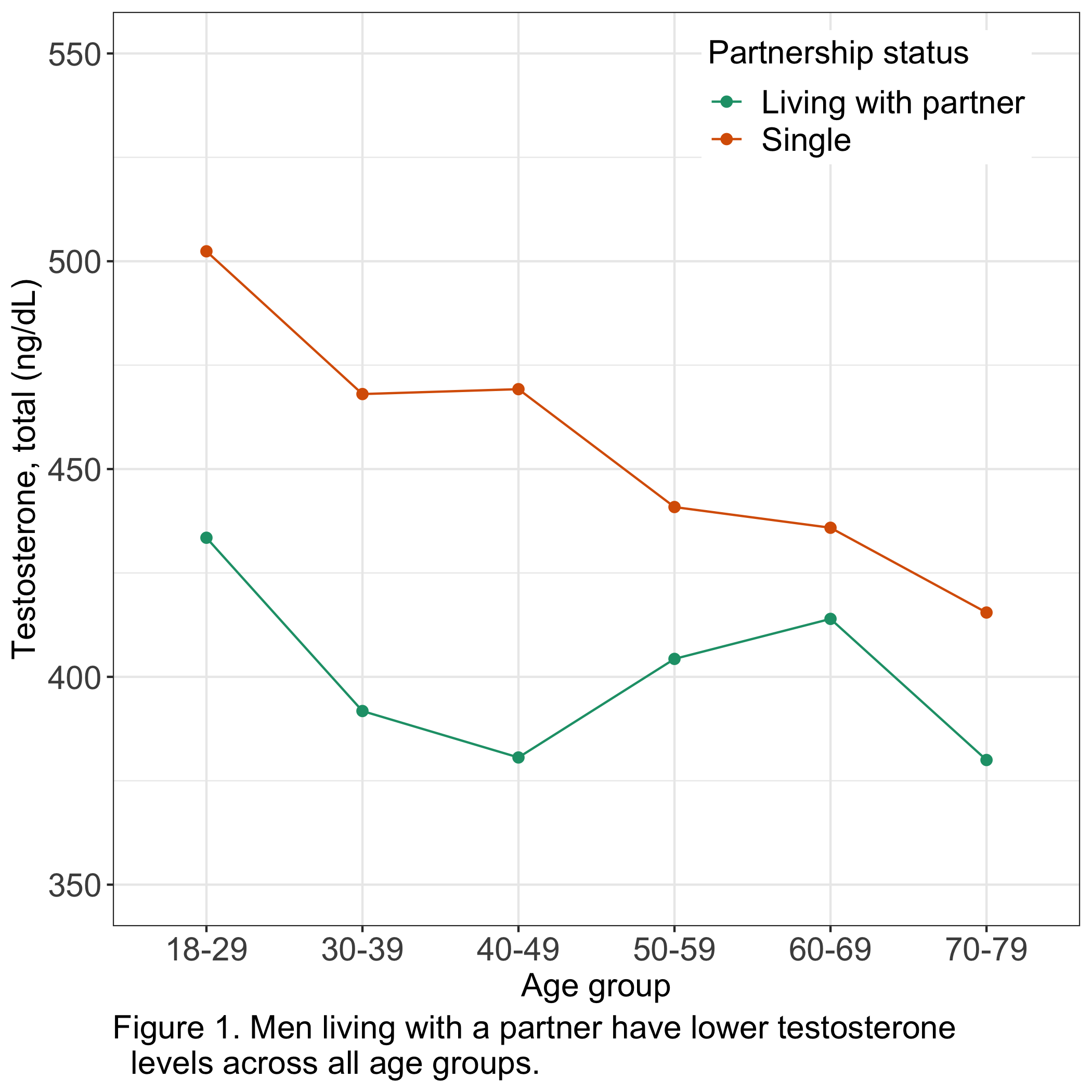
Introduction: Effects of social determinants of health (SDOH) on male reproductive health are poorly understood, but they play an important role in cardiovascular health in men. In this study, we wanted to answer if marital status, education, and income, in addition to biological factors, affect total testosterone (TT) levels. Methods: Data from the 2013-2016 NHANES survey were included. TT was measured using liquid chromatography mass spectrometry certified by CDC. Subjects 18-79 years old were evaluated in the study. The effect of marital status, the ratio of family income to poverty (PIR), education level, current use of tobacco, presence of diabetes mellitus (DM), coronary artery disease (CAD), hypercholesterolemia, hypertension, age, and body mass index (BMI) on TT were evaluated using multivariate and univariate analysis. The living with a partner group included men living with a partner or married; the single group included widowed, divorced, separated, or never-married men. TT levels are reported as mean values. P-value <0.05 was considered significant. Results: Data from 4,224 men were included. Men living with a partner had significantly lower TT (400 ng/dL) than single men (470 ng/dL) (p < 0.0001). Men with at least a college degree had lower TT (415 ng/dL) compared to men without a high school diploma (438 n/dL) (p=0.04). Men aged 18-79 with income below the median PIR (3.09) had higher TT (p=0.009; univariate model). Older men (60-70 yo) with the lowest income (PIR <1) had lower TT (383 ng/dL) than men with higher income (417 ng/dL) (p=0.048). In the multivariate analysis, cohabitation had the largest negative effect size on TT (p < 0.001) compared to that of BMI (p < 0.001), DM (p=0.02), and hypercholesterolemia (p < 0.001), but the effect of education and PIR was not significant. Current smokers had higher TT than never-smokers (p=0.03). Conclusions: SDOH was a significant predictor of TT. Married men, men with at least a college education, or men with higher income had significantly lower TT levels. Epidemiological and biological factors of our findings have to be further investigated; a sedentary lifestyle, diet, and neurobiological changes related to cohabitation may be possible explanations. Maintaining an active and healthy lifestyle for all, especially married men, is important to sustain optimal TT. SOURCE OF Funding: Fracchia Research Scholarship