College of Medicine, The Catholic University of Korea
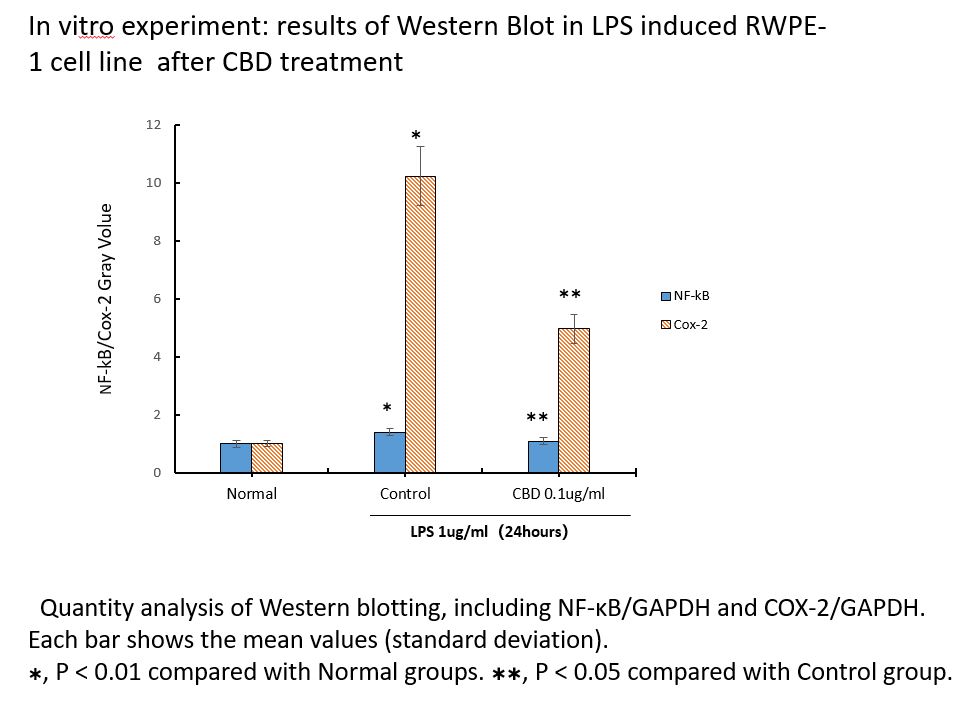
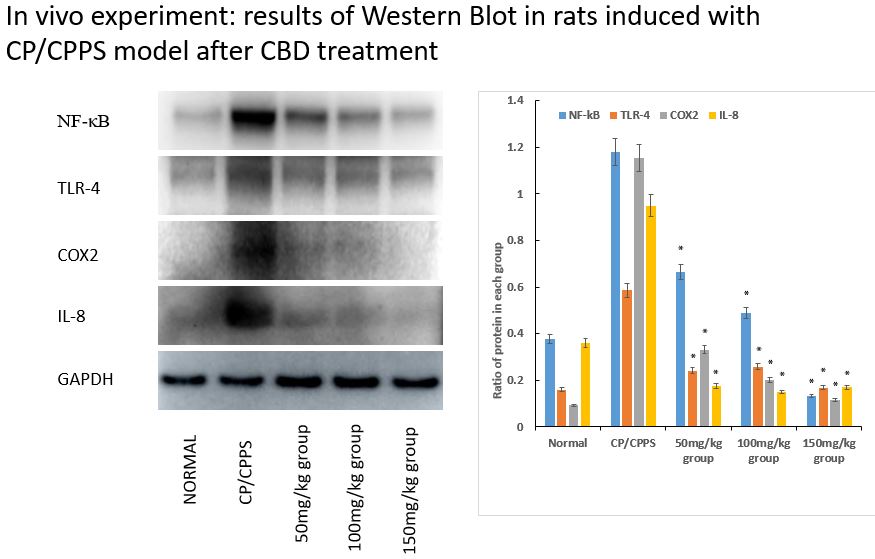
Introduction: The purpose of this study was to assess the effect and investigate the mechanism of cannabinoids on LPS-induced inflammation in RWPE-1 cells and dihydrotestosterone-induced prostatitis rat model. Methods: RWPE-1 cells were randomly divided into five groups: (a) RWPE-1 group (normal control), (b) LPS group (lipopolysaccharide-induced inflammation) and (c) CBD group (LPS-induced RWPE-1 treated by Cannabidiol), (d) CBC group (LPS-induced RWPE-1 treated by Cannabichromene), (e) CBG group (LPS-induced RWPE-1 treated by Cannabigerol). Also prostatitis rat models were diveided into tow groups: (f) CBD treated group, (g) placebo group. After administration of cannabinoids therapy, cells were collected for immunofluorescence and cells were taken from the supernatant for Western blot analysis. Results: Three cannabinoids improved cellular inflammation in RWPE-1 by attenuating inflammation (P < 0.01). Also, CBD improved Chronic prostatitis/chronic pelvic pain syndrome (CP/CPPS) in rats when evaluated by von frey filaments exam. Cannabinoids reduced cyclooxygenase 2 (COX-2) expression by inhibiting the TLR4-NF?B pathway compared with the LPS group with in vitro prostatitis (P < 0.05). TRAF2 mediates the ERK1/2-COX2 pathway. Conclusions: Cannabinoids ameliorate CP/CPPS and reduce inflammation by degrading COX-2 in the microenvironment through the TLR4-NF?B inhibitory pathway. thus suggesting that cannabinoids may be a potential and promising approach for the treatment of CP/CPPS. SOURCE OF Funding: none