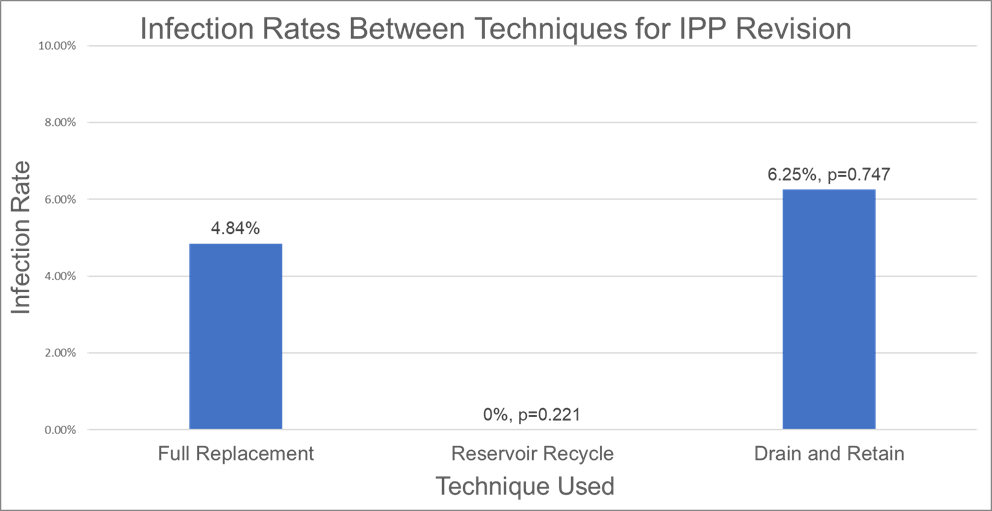
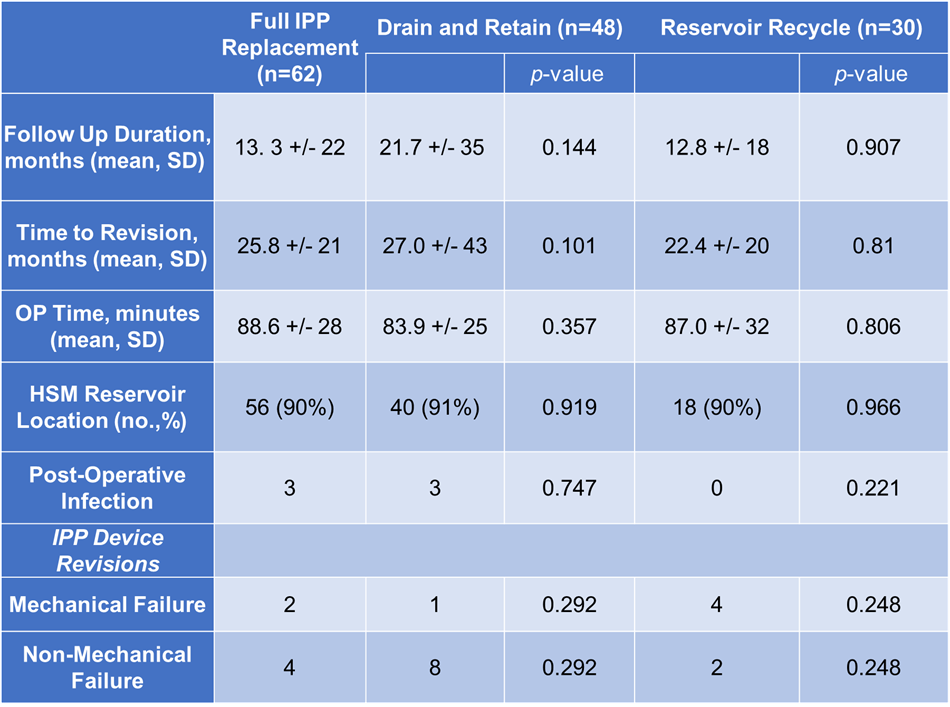
Introduction: Three common strategies exist for managing an inflatable penile prothesis (IPP) reservoir during revision surgery: the original reservoir can be (a) removed, (b) deactivated and left in situ (drain and retain), or (c) validated and reconnected to new IPP cylinders (reservoir recycling). We compared the efficacy and safety of the drain and retain and reservoir recycling approaches to IPP revision against the gold standard of full device removal and replacement. Methods: We performed a retrospective chart review of our single-surgeon IPP database between 2007-2022 to identify patients who underwent revision. Cases were stratified by reservoir management technique. Patients who had undergone at least one follow-up visit and had complete documentation regarding reservoir handling were included. Reservoir-related complications necessitating surgical intervention such as infection, mechanical failure, and non-mechanical failure were compared between the three groups using a chi-square test. Mean follow-up duration, time to revision, and operative time were assessed using a Student’s T-test. Results: Among 140 patients who met inclusion criteria, 62 underwent full reservoir replacement, 48 had drain and retain, and 30 had reservoir recycling. When compared to full replacement, retained and recycled reservoir groups had similar mean follow-up duration, time to revision, and intraoperative time (Table). The rates of infection, mechanical failure, non-mechanical failure, and revision were similar for the retained and recycled groups when compared to the full replacement group. There were no instances of reservoir herniation or reservoir-related bowel complications between the three groups. Conclusions: There was no difference in reservoir-related complications when comparing the drain and retain or reservoir recycle groups to the full replacement group. Both the drain and retain as well as reservoir recycling techniques are safe and effective management options in IPP revision surgery. SOURCE OF Funding: N/A