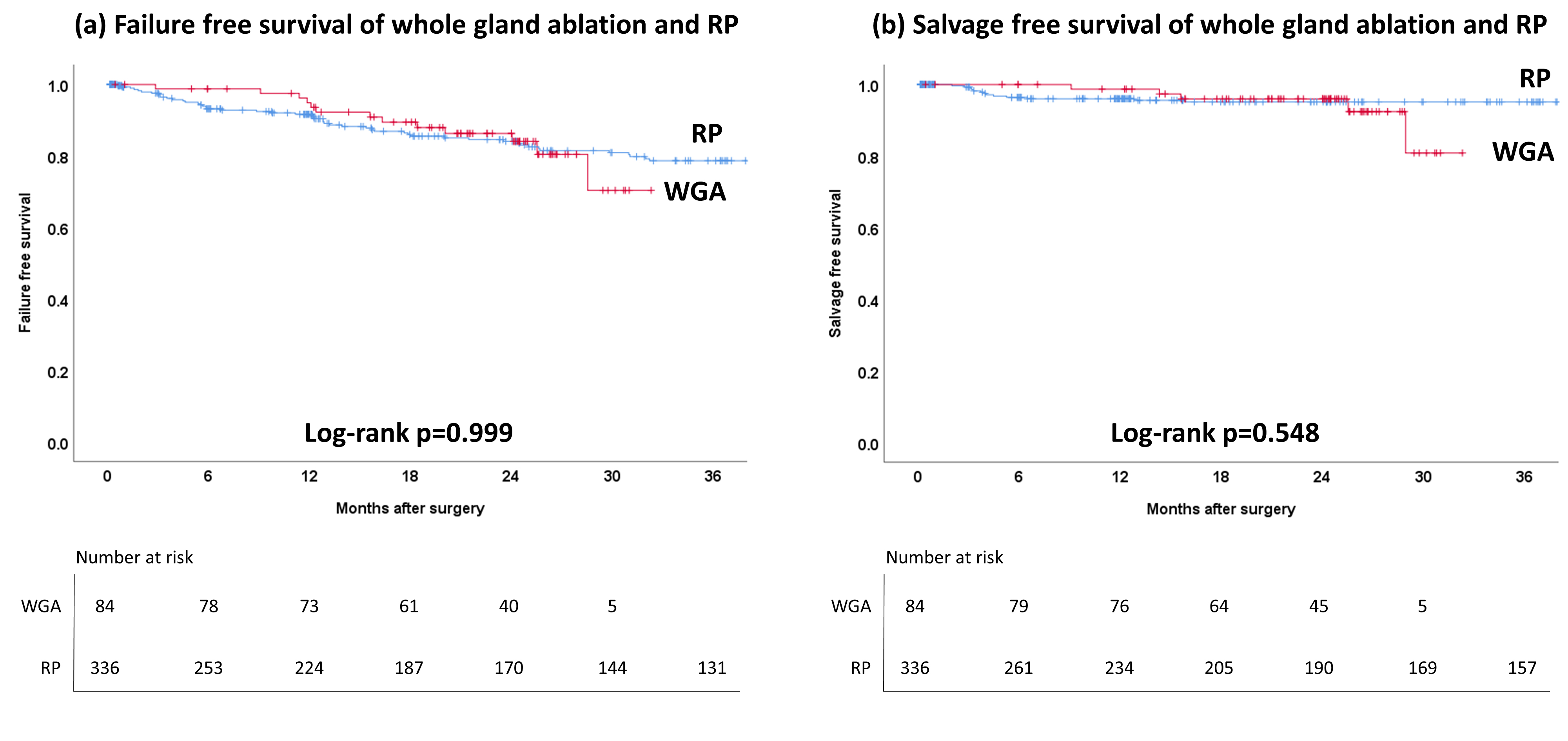
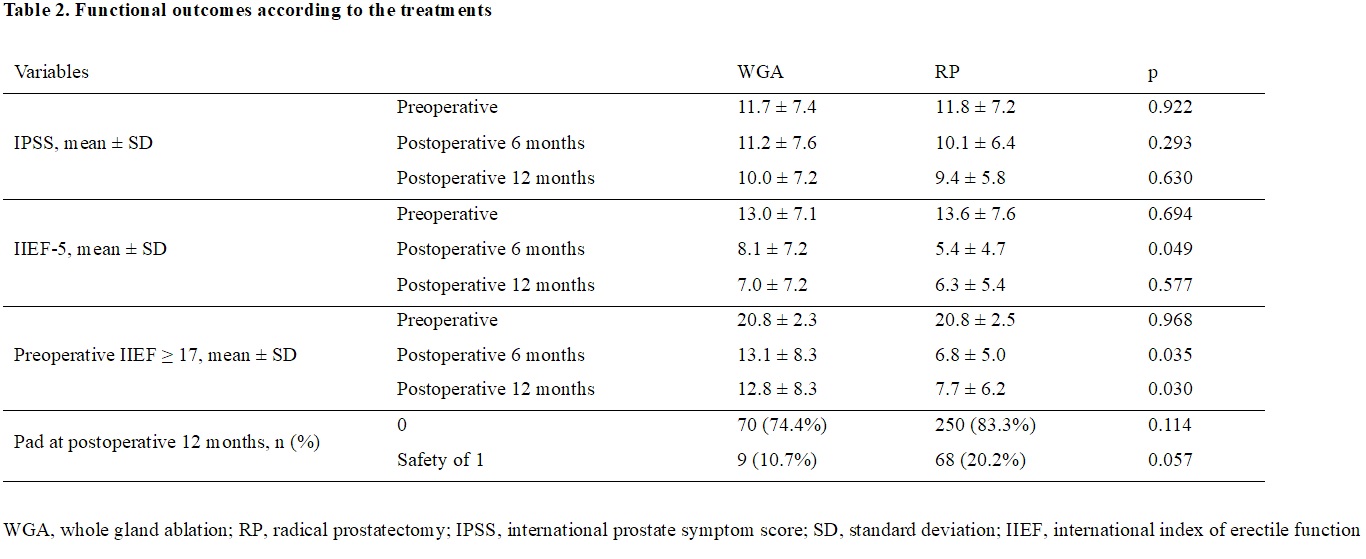
Introduction: We compared the clinical outcomes of robot-assisted radical prostatectomy (RARP) and whole gland ablation (WGA) using high-intensity focused ultrasound (HIFU) in localized prostate cancer. Methods: We analyzed 3,806 patients who had undergone RARP and WGA using HIFU. According to the propensity score for each treatment, 84 patients after WGA were matched to 3,722 patients after RARP at a 1:4 ratio using the nearest neighbor method. Results: The matched cohort comprised 420 subjects (RARP, 336; PGA, 84), with a median follow-up period of 26 months. Treatment failures were identified in 16.7% and 15.5% of patients in the WGA and RARP groups, respectively. Kaplan-Meier analyses revealed no significantly failure-free (p = 0.999) and salvage-free survival (p = 0.548) in the RARP group than in the WGA group. There was no significant difference in the postoperative urinary symptom score (p = 0.630), but the postoperative erectile function score in group of preoperative international index of erectile function (IIEF) = 17 was significantly higher in the WGA group (p = 0.030). The rate of urinary incontinence (any pad) was lower in the WGA group than that in the RARP group (10.7% vs 20.2%, p = 0.057). Postoperative complications were more frequent in the WGA group (p < 0.001); however, there was no significant difference in high-grade complications (= 3) (p = 0.201). Conclusions: WGA using HIFU showed statistically similar oncological outcomes compared with RARP for failure-free survival and salvage-free survival. However, functional outcomes regarding erectile function in selective group and postoperative incontinence were more favorable in the WGA group. SOURCE OF Funding: N/A