Session: PD31: Renal Transplantation & Vascular Surgery II
PD31-01: Impact of Transversus Abdominus Plane Nerve Block During Kidney Transplantation on Patient Post-Operative Opioid Usage: A prospective, randomized, double-blinded study
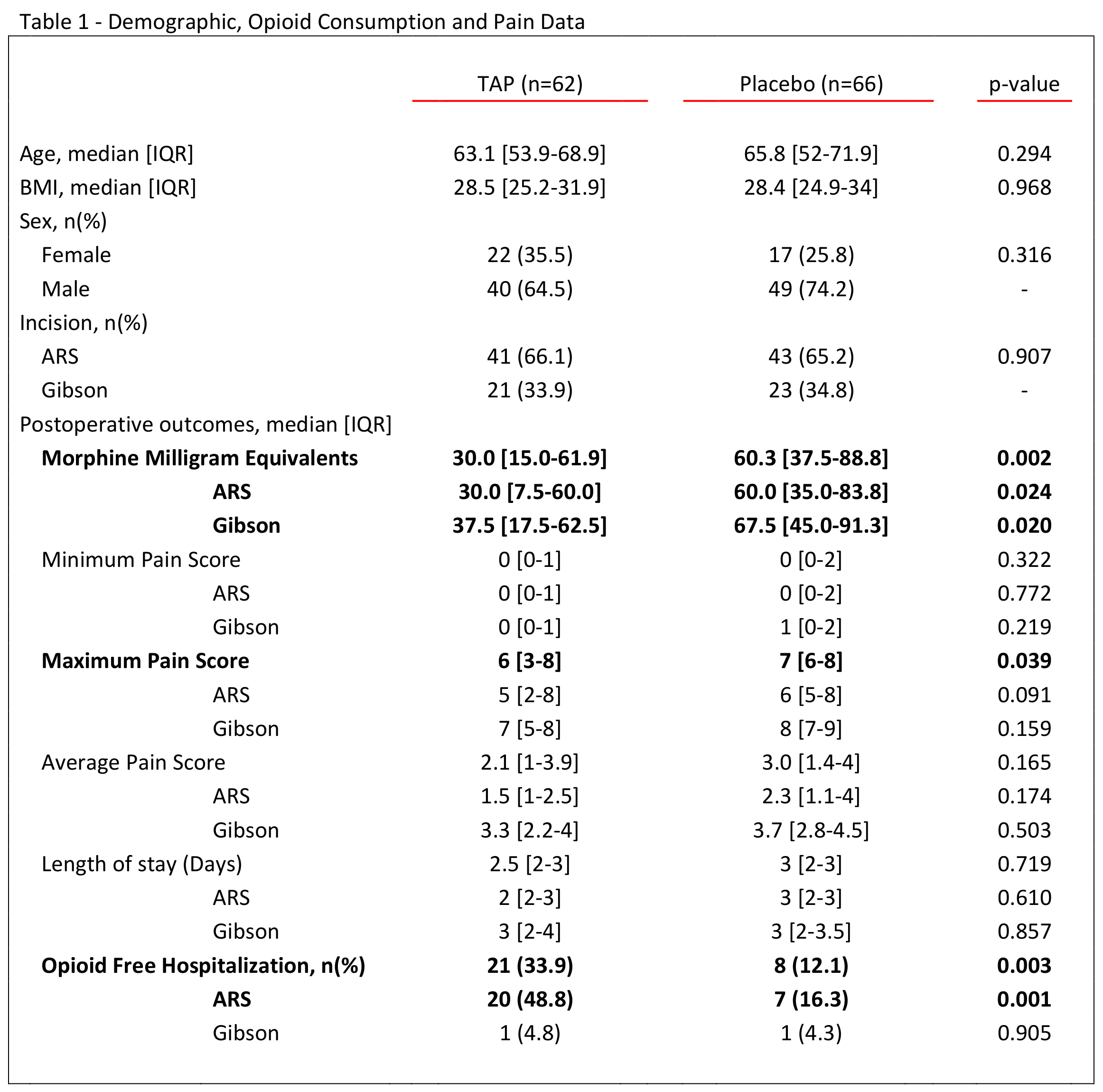
Introduction: Kidney transplantation is a life-altering procedure with excellent surgical outcomes. However, options for post-operative analgesia are limited by pre-existing renal dysfunction and most centers rely heavily on opioids for pain control. Transversus Abdominus Plane (TAP) blocks provide abdominal wall analgesia and may reduce surgical site pain. We aim to determine the effectiveness of intraoperative surgeon-administered TAP block for reducing post-operative opioid usage and pain in kidney transplantation patients. Methods: Patients undergoing kidney transplantation via either a standard Gibson incision or the anterior rectus sheath (ARS) approach were randomized intraoperatively 1:1 to TAP block (a combination of liposomal and unbound bupivacaine) or normal saline via the reflected abdominal wall prior to bringing the kidney into the field. Patients and treating team were blinded to randomization. Post-operative opioid usage, pain via dedicated survey, and length of stay for both groups were recorded. Differences between groups were calculated via t-test, ?² and Mann Whitney U tests. Results: 128 patients were randomized and were evenly distributed (Table 1). Patients receiving the TAP block required fewer morphine milligram equivalents (MME) (30.0 vs 60.3, p=0.002) and had a lower maximum pain score (6 vs 7, p=0.039) compared to placebo. MME was reduced with TAP in both the ARS (p=0.024) and Gibson subsets (p=0.020). 27 of the patients receiving an ARS incision used no opiates while inpatient, with significantly more patients having received the TAP vs placebo (20 vs 7, p=0.001). Conclusions: TAP block reduced MME usage by half for each surgical approach. 26% of the cohort did not require any opioids following transplantation including half of all patients receiving the combination of ARS and TAP block. The TAP block is an easily-implemented adjunct with the ability to significantly decrease the post-operative opioid use in renal transplantation with the additional possibility of opioid-free transplantation in select patients. SOURCE OF Funding: None