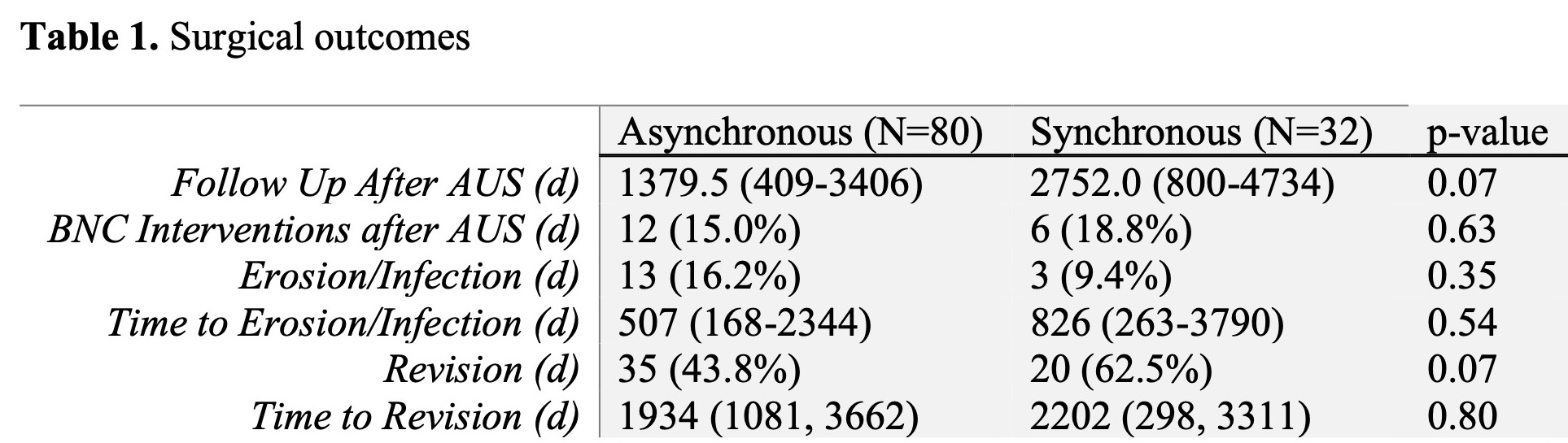
Introduction: For men with bladder neck contractures (BNC) and stress urinary incontinence (SUI), neither long-term nor comparative data exist to support the superiority of simultaneous BNC intervention at the time of artificial urinary sphincter (AUS) placement (synchronous) or staged BNC intervention followed by AUS placement (asynchronous). This study aimed to compare outcomes of patients treated with synchronous and asynchronous protocols. Methods: Using a prospectively maintained quality improvement database, we identified all men between the years of 2001-2021 with a history of bladder neck contracture and artificial urinary sphincter placement. Baseline patient characteristics and outcome measures were collected. Categorical data was assessed with Pearson’s Chi-square and continuous data was assessed using independent sample t-tests or Wilcoxon Rank-Sum test. Results: In total, 112 men met inclusion criteria. Thirty-two patients were treated synchronously and 80 were treated asynchronously. There were no significant differences between groups across 15 relevant clinical and surgical variables. Median overall follow-up duration was 7.1 (Interquartile range: 2.8-13.1) years. Three (9.3%) in the synchronous group and 13 (16.2%) in the asynchronous group experienced an erosion (p = 0.35). There were no significant differences in the frequency of erosion, time to erosion (507 days vs. 826 days; p = 0.54), AUS revision (43.8% vs. 62.5%; p = 0.07), time to revision (1934 days vs. 2202 days, p = 0.80), or BNC recurrence (15.0% vs. 18.8%, p = 0.63). BNC recurrences after AUS placement were treated with serial dilation with no early device failure or erosion. Conclusions: Similar outcomes are achieved following synchronous and asynchronous treatment of bladder neck contracture and stress urinary incontinence. Synchronous approaches should be considered standard of care for men with SUI and BNC. SOURCE OF Funding: None.