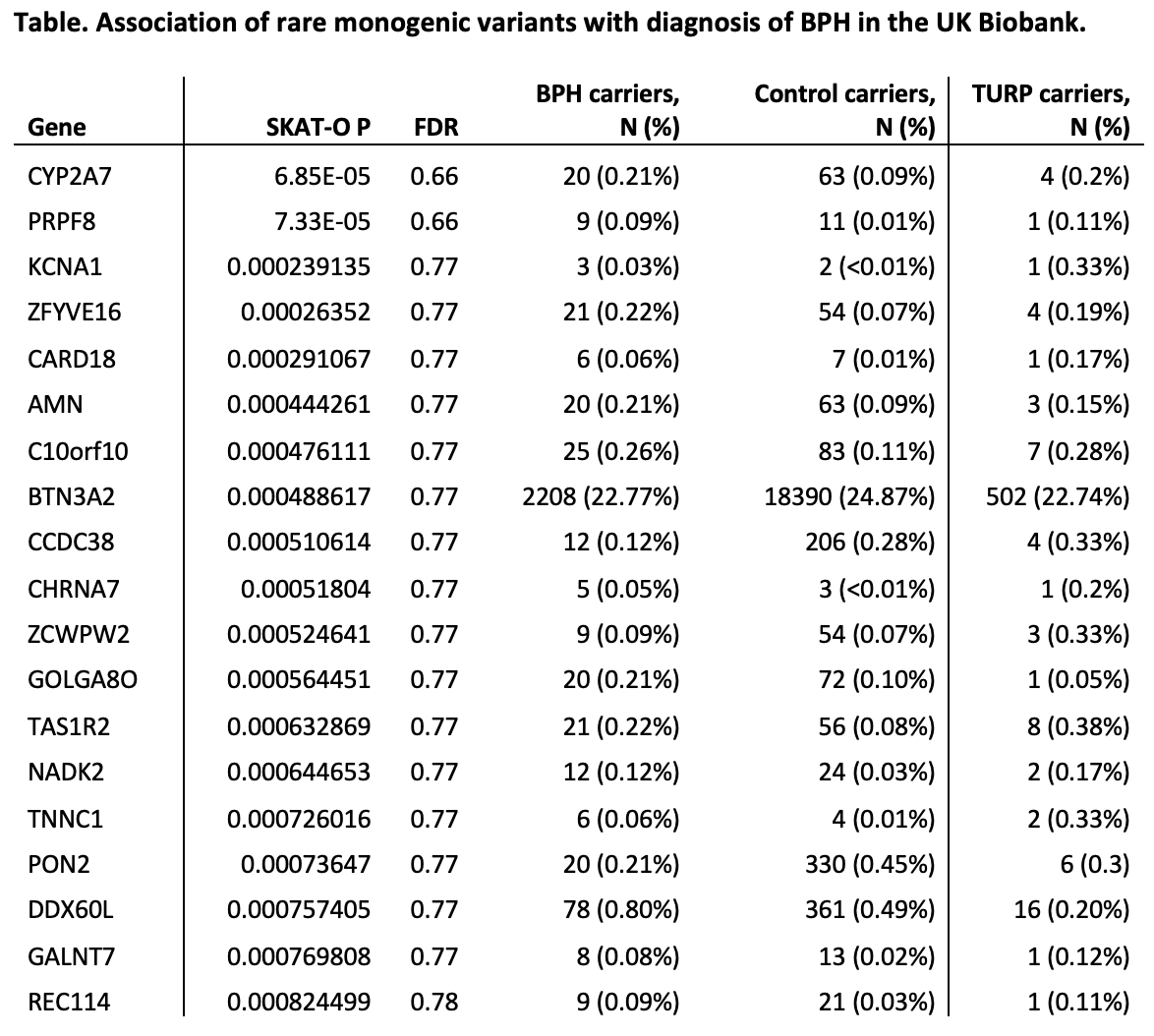
Introduction: Benign prostatic hyperplasia (BPH) is a common condition that leads to bothersome lower urinary tract symptoms. Polygenic heritability of BPH has been demonstrated using genetic risk scores derived from common single nucleotide polymorphisms, but rare monogenic gene mutations associated with BPH have not been well described. The objective of this study was to determine the impact of rare monogenic variants on the development of BPH. Methods: A total of 83,631 men from the UK Biobank (UKB) with whole exome sequencing data were included and categorized based on ICD10 diagnosis of BPH (N40). Of men with BPH, 9,697 were further characterized as undergoing transurethral resection of prostate (TURP). The robust SKAT-O, a novel gene-based analysis of pathogenic/likely pathogenic mutations that properly controls for type I error rates due to unbalanced case-control ratio, was used for association tests adjusting for age at recruitment and genetic background. Results: Nineteen candidate genes were identified as associated with BPH in 9,697 cases compared to 73,934 controls at p<0.001 using SKAT-O (Table). However, none of these associations was significant after adjusting for multiple testing (FDR <0.05). For most of these genes, higher carrier rates in patients undergoing TURP was also found. Conclusions: In this large study of nearly 84,000 men, several candidate genes were identified. Confirmation in independent study populations is required. Identification of monogenic gene mutations associated with BPH may advance our understanding of disease etiology and identify potential therapeutic targets. SOURCE OF Funding: NA