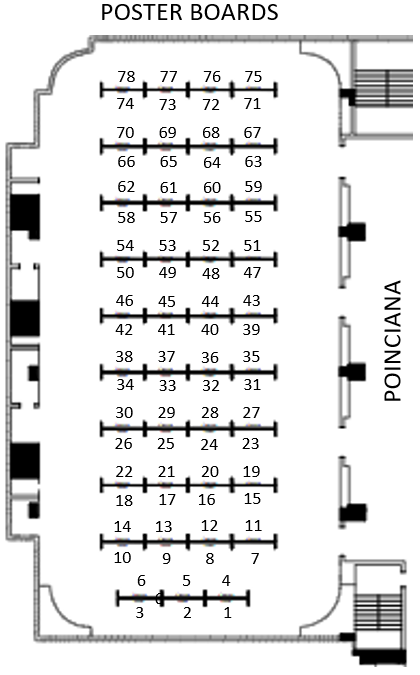
(Screen 3 - 6:30 PM Saturday) A Six Sigma Approach to Multidisciplinary Rounding Practices for a Complex Congenital Heart Program to Improve Patient Quality, Education, and Resource Utilization
Physician Assistant UTHealth Houston/Children's Memorial Hermann Texas Medical Center Houston, Texas, United States
Abstract: Introduction/
Objective: Our institution has a Heart Center Intensive Care Unit (HCICU), Intermediate Unit (IMU), and Neonatal Cardiac Intensive Care Unit (NCICU). Cardiology Advanced Practice Providers (APPs) participate in inpatient rounds in the IMU and NCICU. We hypothesized rounding variation impacts quality of patient care, provider education, productivity, and cost of downtime.
Methods: Our team chose the Six Sigma methodology to identify rounding process variation. Subjective data included surveys (n=37) from physicians, APPs, and nursing staff. Additionally, objective data from APP observations of rounds (n=51; n=1,137 patients) were collected. Survey and observational data evaluated impact on provider education, number of interruptions during rounds, preparation for rounds, timing of rounds, HCICU handoff, rounding environment, communication strategies, and downtime (non-effective rounding time). Productivity and revenue loss was assessed using observational data, number of providers present for rounds, and average salary for each role. Based on our data, interventions included developing a rounding process map, creating a checklist, standardizing HCICU handoff, and implementing a hard start/stop time of rounds.
Results: Survey evaluation of the rounding environment demonstrated 86% of respondents were not able to hear every presentation, 70% of orders were not reviewed, and 92% of daily goals were not read back for every patient. All non-attending providers preferred to complete physical exams before rounds compared to 25% of attending physicians. All respondents reported rounds did not end in a timely manner. Delays when waiting for HCICU sign out were reported by 60%. Nurses (80%) were not able to participate regularly in rounds for their patients. 71% reported length of rounds negatively impacted scheduled education. Observations revealed rounding start time varied from 8:30-10:00 am and averaged 3 hours per day (range 55 minutes to 5 hours 56 minutes). Team members missed 63% of required and 80% of additional educational conferences. Average downtime was 1 hour 17 minutes. Potential revenue loss was approximately $660 per day or $240,900 per year. After implementation of the standardized process defined above, total time rounding was less than 3 hours, 90% of conferences were attended (P < 0.001), and downtime was less than 30 minutes (P < 0.001).
Conclusions: Significant variation in a multidisciplinary rounding process impacts all aspects of patient care for our complex congenital heart program. After implementation of a standardized process, we demonstrated a consistent pre-rounding process, established round start time/stop times, increased nursing involvement, decreased HCICU handoff delays, increased educational attendance, and decreased opportunities for productivity loss. Multidisciplinary process implementation and standardization of the rounding process for the care of children with complex congenital heart disease allows for improved patient care, provider education, and resource utilization.