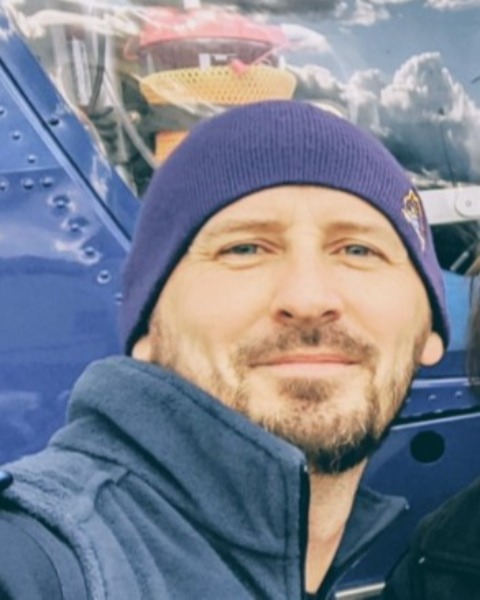
Flight Paramedic EastCare Edenton, North Carolina, United States
Advanced practice providers, high performers, and flight clinicians all share a certain amount of experience, education, and drive that enables them to stand in the gap between disaster and hope. What is it that allows these special individuals to accomplish what others cannot? Is it a personality trait? A specific educational tool? A particular simulation? Perhaps these people all practice mindfulness or meditation.... or perhaps they are actually superheroes. The purpose of education in the critical care and flight arena is to take advantage of the extensive knowledge and experience of the practitioners and then extend them even more. This talk will outline some of the neurophysiology of learning and some of the known inhibitors of performance training. After participating in the lecture, attendees will better understand the foundational concepts of learning, surprise, and performance and also be better prepared to develop their own scenarios and simulations for their teams back home. This lecture will utilize examples from pop culture, movies, podcasts, and real life to illustrate training strategies that are productive and address some habits that are counterproductive. Not every surprise leads to change, but every change emerges from a surprise.
Learning Objectives:
Upon completion, participants will be able to recognize the anatomy associated with memory and learning and how the mechanisms by which the anatomy changes with training.
Upon completion, participants will be able to describe various types of attention and how attention influences the ability to learn.
Upon completion, participants will be able to identify methods of simulation that promote improved performance.

.png)
.png)
.png)
.png)
.png)
.png)
.png)
.png)
.png)
.png)
.png)
.png)
.png)
.png)
.png)
.png)
.png)
.png)
.png)
.png)
.png)
.png)
.png)