Assistant Professor Department of Dentistry and Oral Surgery, Keio University School of Medicine
Background: As the number of adult patients seeking orthodontic treatment has increased in recent years, orthodontists are increasingly encountering patients with periodontal disease. Orthodontic treatment is not recommended for patients with periodontal disease because it involves tooth movement caused by orthodontic forces compressing and resorbing the periapical bone. There hasn't been a consensus on how to treat periodontitis after orthodontic treatment has begun.
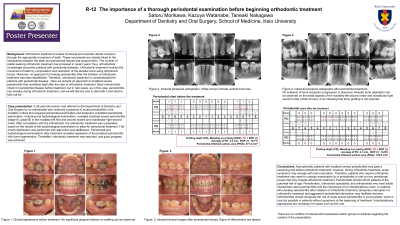
Case: An orthodontist sent a 32-year-old woman to the Department of Dentistry and Oral Surgery after noticing acute signs of periodontitis in the maxillary molars, which necessitated a periodontal examination and treatment. Localized severe periodontitis (Stage III grade B) was revealed in the maxillary left first and second molars, as well as the mandibular right second molar. Clinical Procedures and Outcomes: After consulting with the orthodontist, the orthodontic treatment was put on hold to allow for periodontal treatment based on the results of the bacteriological examination. Oral sitafloxacin was used to perform Full-mouth disinfection. After therapy, periodontal and bacteriological exams revealed signs of bone regeneration and regression of localized periodontitis. The patient's orthodontic therapy was then continued, with excellent results.
Conclusion: Asymptomatic patients with localized severe periodontitis may pass the screening test before orthodontic treatment; nevertheless, acute symptoms with bone resorption may occur during orthodontic treatment, causing treatment suspension. On the other hand, a temporary orthodontic treatment interruption and rigorous periodontal intervention may aid in recovery. All patients who need orthodontic treatment should see a periodontist rule out any periodontal problems that could obstruct the orthodontic treatment.


.jpg "Satoru Morikawa, DDS, PhD photo")