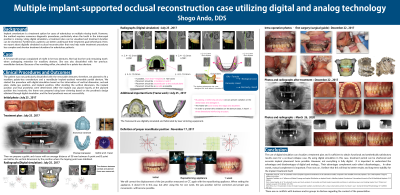
Background: Implant overdenture is a treatment option for cases of edentulous or multiple missing teeth. However, the method requires numerous diagnostic procedures, particularly when the tooth in the intercuspal position is missing. Using digital simulation, a treatment plan can be visualized and treatment duration can be shortened. Furthermore, patients can better understand their treatment goal beforehand. Here, we report about digitally simulated occlusal reconstruction that may help make treatment procedures less complex and shorten treatment durations for edentulous patients.
Case: A 72-year-old woman complained of misfit in her two dentures. She had lost her only remaining tooth when undergoing retention for maxillary denture. She was also dissatisfied with her previous mandibular denture. Because of her vomiting reflex, she asked for a palate-less denture.
Clinical Procedures and Outcomes: The patient was not particularly dissatisfied with the removable dentures; therefore, we planned to fit a maxillary palate-less overdenture and a mandibular implant-assisted removable partial denture. We started the procedure with digital simulation based on the information of vertical dimension, occlusal plain, stable jaw position, and implant position. After deciding the vertical dimension, the implant position and final prosthesis were determined. After the implant was placed exactly at the planned position less invasively, the frame was prepared using laser sintering based on the prosthesis design obtained through digital simulation, and the final prosthesis was set successfully.
Conclusion: The use of digital simulation is sufficient to obtain functional and aesthetically satisfactory results.