Poster Session D
Lily Romero Karam, MD
University of Texas Health Science Center Houston
Houston, TX, United States
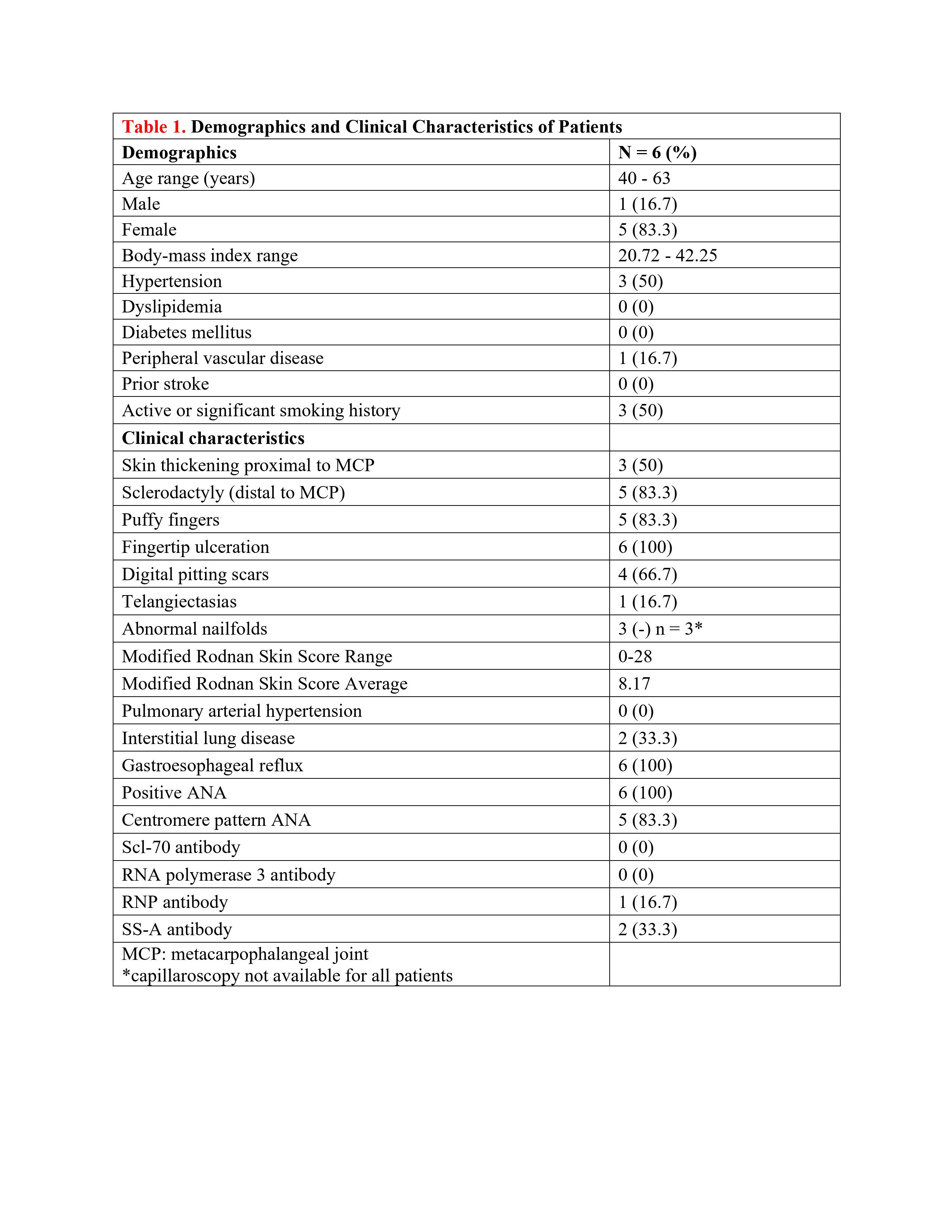 Table 1. Demographics and Clinical Characteristics of Patients
.jpg) Table 2. Procedural And Clinical Outcomes Following Angioplasty In Scleroderma Patients With Refractory Raynaud’s Phenomenon
Table 2. Procedural And Clinical Outcomes Following Angioplasty In Scleroderma Patients With Refractory Raynaud’s Phenomenon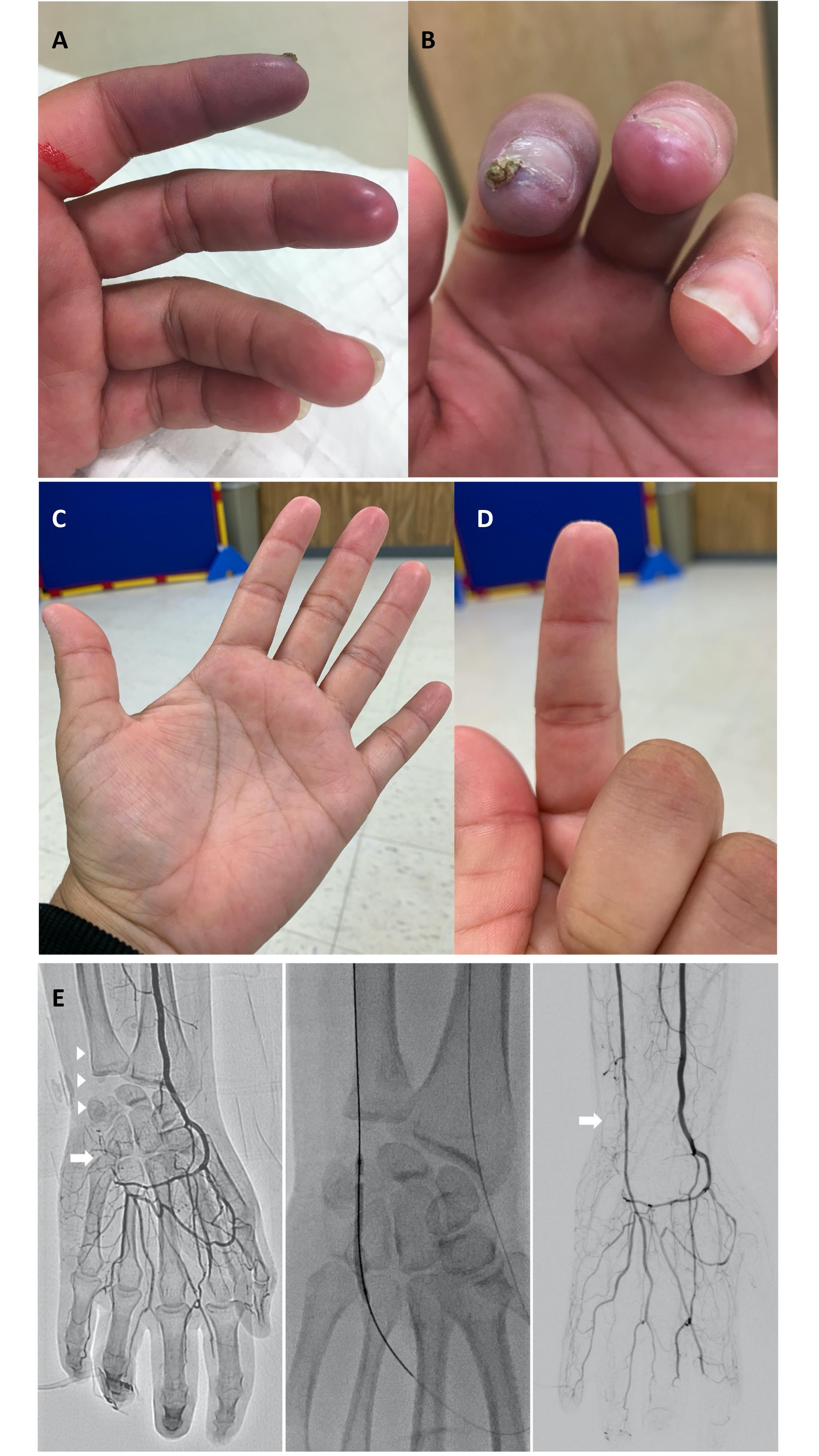 Figure 1. Left hand of Patient 1. Panel A shows impending skin necrosis at the tips of the 2nd and 3rd digits, prior to procedure 1. Panels C and D show resolution of ischemia after procedure 2. Panel E shows occlusion of the left ulnar artery (arrowheads) and interrupted superficial and deep palmar arches (arrow). After percutaneous transluminal angioplasty of the ulnar occlusion (middle image), the final angiogram shows restoration of antegrade flow into the superficial and deep palmar arches through the patent ulnar artery (arrow).