Abstract Session
Henri Tiedge, PhD
SUNY Downstate Health Sciences University
Brooklyn, NY, United States
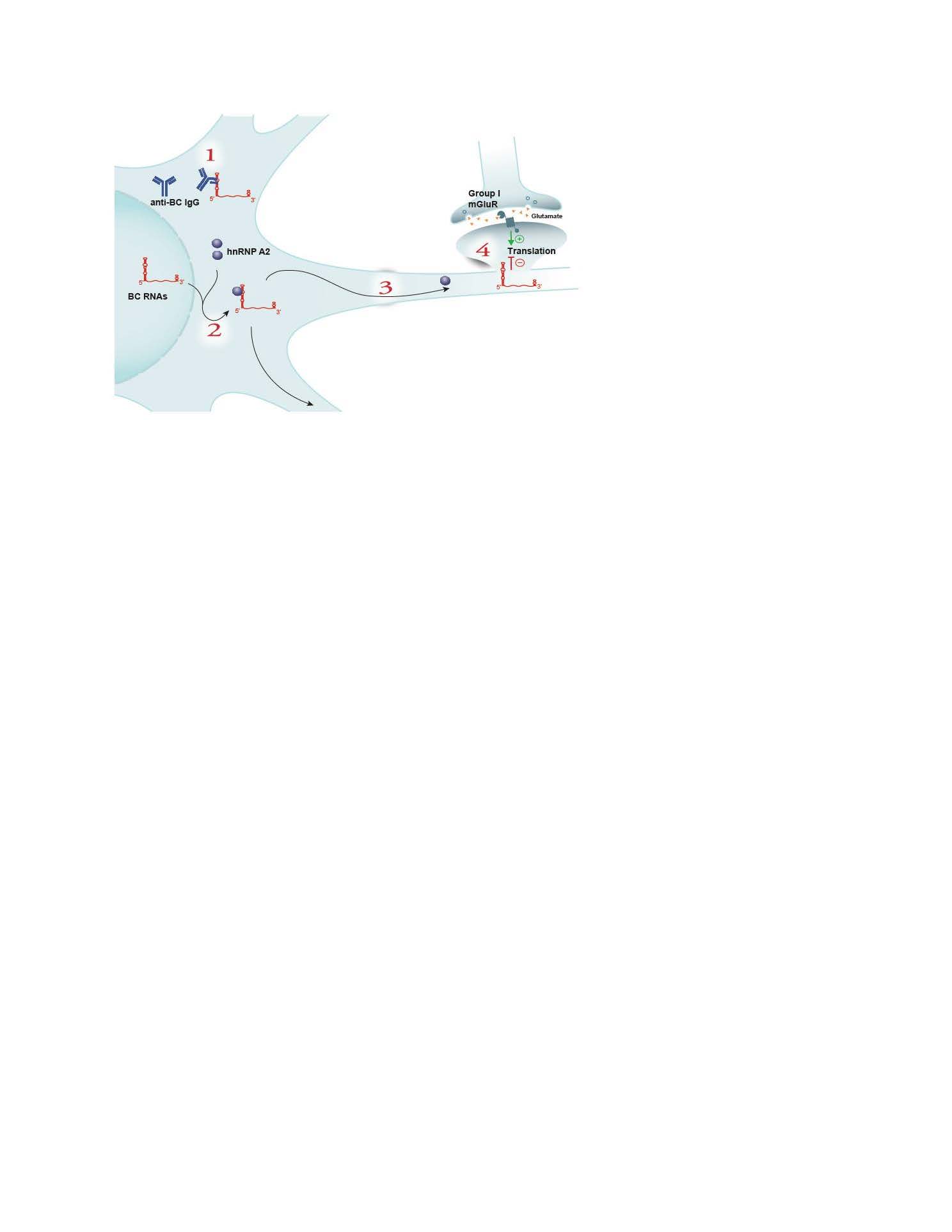 Figure 1. SLE anti-BC abs: molecular – cellular mode of action. SLE anti-BC abs target transport-specifying DTEs in BC RNA (here represented by rodent BC1 RNA) 5’ stem-loop domains (Scene 1), thereby preventing association of transport factor hnRNP A2 with such DTEs (which occurs normally in the absence of SLE anti-BC abs; Scene 2). Dendritic delivery of BC RNAs (Scene 3) is thus compromised by SLE anti-BC abs. Lack of BC RNAs at the synapse results in dysregulation of local translational control (Scene 4), causing synaptic hyperexcitability (due to unbalanced and therefore excessive group I metabotropic glutamate receptor stimulation of local translation) and con¬sequential phenotypic alterations.
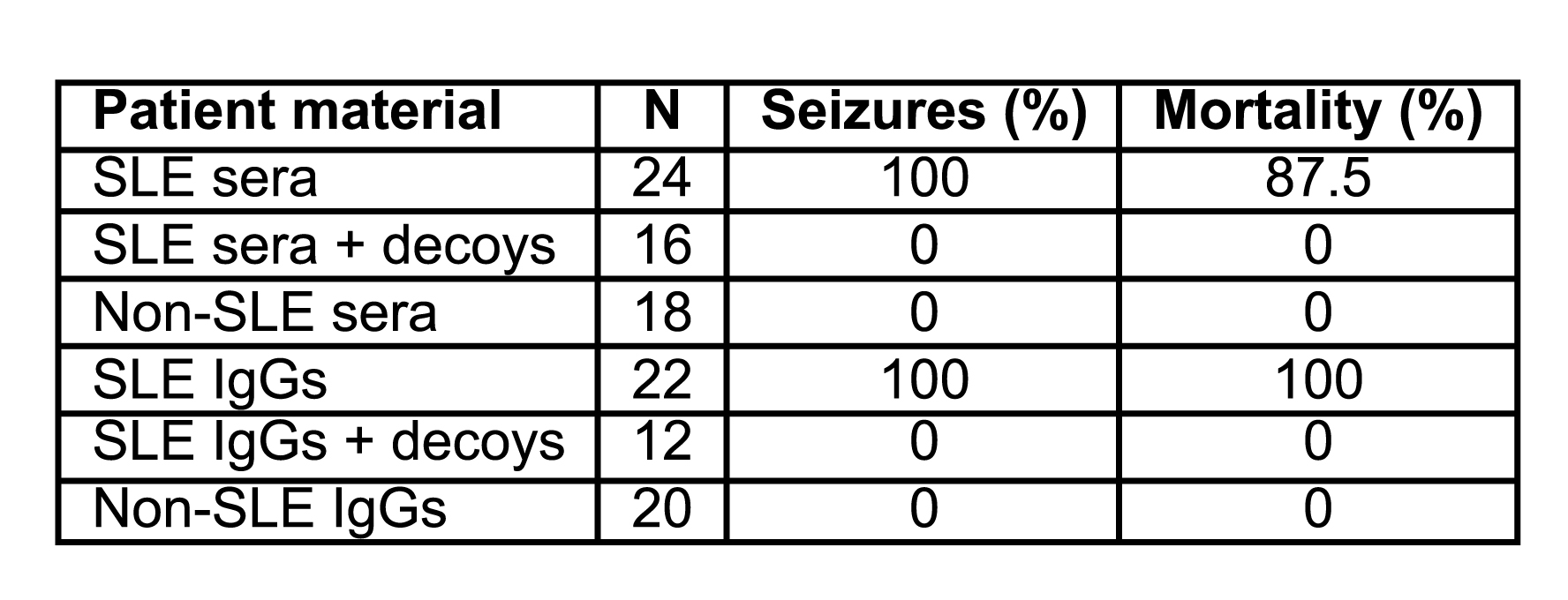 Table 1. Seizure susceptibility and mortality of wild-type mice injected with lupus or non-lupus sera or purified IgGs. Animals were subjected to 120-dB auditory stimulation for 15 min (or until death, if occurring earlier). Patient material is defined as follows. SLE sera/IgGs, sera/IgGs from SLE patients with seizures; non-SLE sera/IgGs, sera/IgGs from patients with rheumatoid arthritis or multiple sclerosis, and from heathy subjects. N, number of animals.
 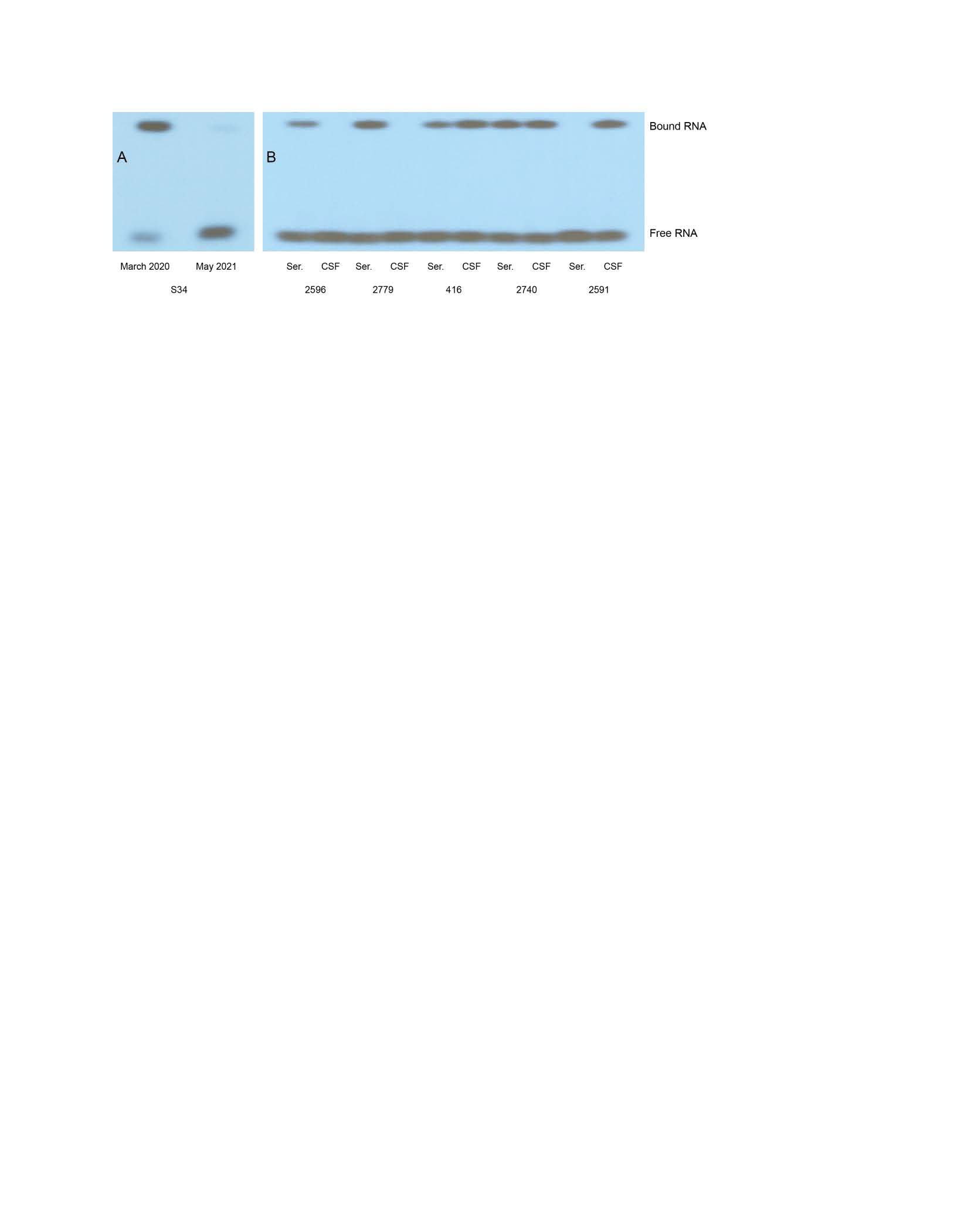 Figure 2. Anti-BC200 reactivities in SLE sera and CSF. Electrophoretic shift assay analysis was performed with patient sera and CSF.