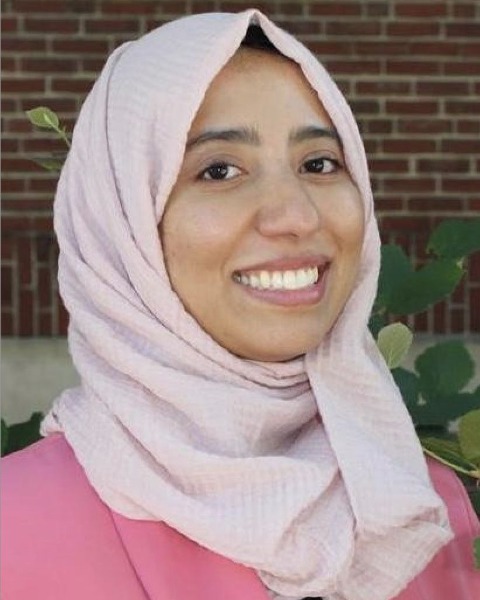
Participants should be aware of the following financial/non-financial relationships: . Alaa H. Qari, BDS, CAGS, DScD: I do not have any relevant financial / non-financial relationships with any proprietary interests.
Abstract: Uneven geographic distribution of dental professionals and physical disabilities faced by special populations are some of the barriers to accessing dental care. The utilization of teledentistry has increased with the pandemic to improve delivery of dental services to vulnerable populations. Given the importance of training dental workforce on emerging services, teledentistry has been incorporated into the dental program of Umm Al-Qura University College of Dentistry in Makkah, Saudi Arabia. A teledentistry unit was established in January 2021 after virtual meetings held with global teledentistry programs. The unit developed two courses that focus on the principles of program planning. The unit also built partnerships with entities that support the lab’s resources. Dental students were involved in research projects that assess the implementation of teledentistry in Makkah. Surveys were distributed to evaluate students’ experiences and perceptions of teledentistry courses. Presentations and projects were also evaluated to assess students’ understanding of topics. Fifty-five students successfully completed one course and, in teams, presented 11evidence-based teledentistry programs. The other course is a recurring module, training small groups of students (n=6-12)on theoretical and practical parts of teledentistry. This four-week module discusses best practices of teledentistry programs, dental plans of various clinical cases and implementation scenarios in Saudi. Before the curriculum, 97% of students did not know about teledentistry. Engaging with the curriculum, around 70% of students are willing to use teledentistry after graduation. Our conclusion that dental schools should include teledentistry in their programs to train future dental workforce and improve access to dental care.